
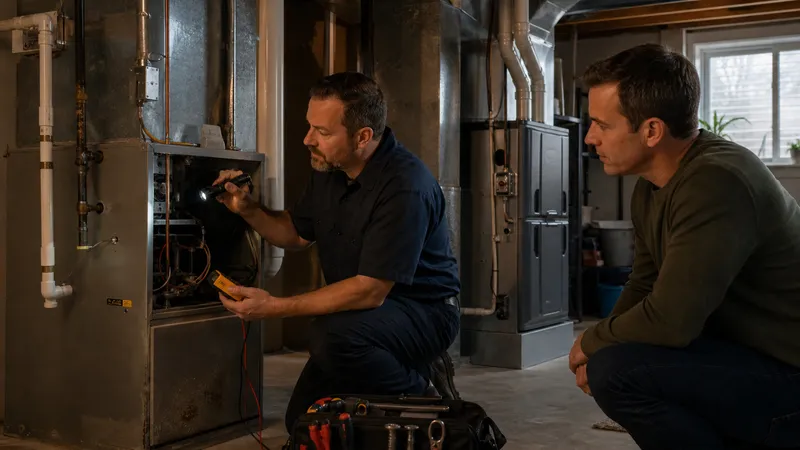
2026 furnace replacement costs by type—gas, electric, high-efficiency, oil—plus the age, AFUE, and repair signs that mean replace, not repair.
Key takeaways
- A full gas furnace replacement runs $3,800-$10,000 installed (avg ~$7,000); high-efficiency condensing models can reach $12,000, per Angi.
- Electric furnaces cost less installed ($1,700-$7,000) but can add $500-$2,000 for a dedicated circuit if you're converting from gas or oil.
- ENERGY STAR's replacement checkpoint: furnace or boiler past 15 years old, especially alongside rising bills or more frequent repairs.
- If a repair quote nears 50-70% of a new furnace's installed cost, get a replacement quote before authorizing the repair.
- A cracked heat exchanger means replace or repair immediately for carbon monoxide safety—age and cost don't change that call.
- Average furnace repair costs $100-$1,500 (national avg ~$318-$350); that's the number to weigh against a full replacement quote.
A gas furnace replacement costs $3,800 to $10,000 installed, averaging around $7,000, with high-efficiency condensing models running as high as $12,000—electric furnaces install cheaper at $1,700-$7,000, and oil furnace replacement runs $2,500-$10,000 for the equipment alone, per Angi’s 2026 furnace cost data. Whether that number is worth spending now, versus repairing what you have, usually comes down to three things: the furnace’s age against ENERGY STAR’s 15-year replacement checkpoint, how often it’s needed a repair call this season, and whether the current repair quote is a minor part or a major one. This page covers the 2026 cost range by furnace type, the specific signs that mean replace instead of repair, and the math for comparing a repair quote against a new-furnace quote. For smaller repairs across the rest of an HVAC system—capacitors, blower motors, refrigerant leaks, ductwork—see the HVAC repair cost guide; this page is the furnace-specific full-replacement decision.
Furnace replacement cost by type (2026)
| Furnace type | 2026 installed cost range | What drives it | Source |
|---|---|---|---|
| Gas, standard efficiency (80-89% AFUE) | $3,800 – $10,000 (avg ~$7,000) | Most common furnace type; size and ductwork condition drive most of the spread | Angi |
| Gas, high-efficiency condensing (96%+ AFUE) | Up to $12,000 | Sealed combustion needs PVC intake/exhaust venting instead of a metal flue, plus a condensate drain | Angi |
| Electric | $1,700 – $7,000 | No gas line or venting, but add $500-$2,000 for a dedicated circuit if this is a first electric furnace | Angi |
| Oil | $2,500 – $10,000 (avg ~$5,000) | Equipment and install only—a chimney liner or oil storage tank replacement adds thousands more if either is needed | Angi |
Those are national ranges. Local labor rates, permit fees, and whether your ductwork or gas line needs modification move any single quote up or down from the middle of its range—get two or three written, itemized quotes rather than comparing a single number against the table above.
What each fuel type actually costs to run
The installed price is half the decision—what it costs to heat with afterward is the other half. The U.S. Energy Information Administration figures Angi cites put average annual heating cost around $750 for gas, $1,250 for electricity, and $1,700 for heating oil, assuming similar usage. That gap is why an oil-to-gas conversion—averaging $8,500 and ranging $3,800 to $13,000 depending on whether a gas line has to be run to the house—pays some homeowners back over several heating seasons even though the upfront cost is higher than a like-for-like oil furnace swap.
Signs you need a new furnace, not another repair
| Sign | Why it points to replacement |
|---|---|
| Furnace is past 15 years old | ENERGY STAR’s general replacement checkpoint for a furnace or boiler—especially alongside rising bills or more frequent repairs |
| More than one repair call this heating season | A pattern, not an unlucky streak—the system is entering its failure period |
| Repair quote is a major component (heat exchanger, blower motor assembly, control board) | These repairs commonly land in the 25-50%+ range of a full replacement’s cost once labor is added |
| AFUE is around 80% or lower (older, non-condensing units) | A new ENERGY STAR furnace can cut heating costs by up to 20% when installed correctly—the efficiency gap alone can justify replacing a working-but-old furnace |
| Cracked or suspect heat exchanger | Carbon monoxide risk—stop using the furnace and get it inspected regardless of age or cost |
| Uneven heating, longer cycles, or louder operation than before | Often early signs of a failing blower motor or heat exchanger, worth a diagnostic visit before it becomes an emergency repair |
Repair vs. replace: the cost comparison
| Repair scenario | Typical cost | Compare against replacement | Usual call |
|---|---|---|---|
| Minor part (igniter, thermostat, blower motor) | $100 – $450 | A small fraction of a $3,800+ replacement | Repair, especially if furnace is under 15 years old |
| Heat exchanger replacement | $1,250 – $3,000 (avg ~$1,750) | 15-45% of a standard gas replacement, more on an older unit already due for other repairs | Get a replacement quote first if the furnace is past 15 years |
| Furnace has had a major-component failure once already | Varies | A second major failure often costs close to what remained of the furnace’s useful life | Replace—repeat major failures rarely stop at one |
| Any repair quote near 50-70% of a new furnace’s installed cost | Job-specific | You’re paying most of a new unit’s price to keep an aging one running | Replace |
The national average furnace repair runs $100 to $1,500, averaging around $318-$350—that’s the number to hold up against the replacement ranges above before you sign off on a repair. A $300 blower-motor repair on an 8-year-old furnace is an easy yes. A $2,500 heat-exchanger job on a 17-year-old furnace that’s already had two service calls this year is worth a second, replacement-focused quote before you commit.
What moves your specific quote
| Factor | How it changes the price |
|---|---|
| Region and local labor rates | Installer labor runs roughly $50-$150/hour and varies significantly by market |
| Ductwork condition | Modifying or extending ducts runs $35-$55 per linear foot; undersized or leaky ducts often get flagged during a replacement quote |
| Switching fuel types (oil to gas, gas to electric) | Running a new gas line or dedicated electrical circuit adds $500-$2,000+ before the furnace itself is installed |
| Venting change (standard to high-efficiency condensing) | Condensing furnaces vent through PVC with a condensate drain instead of a metal flue—a different venting path than the old unit used |
| Sizing and load calculation | A furnace sized to the house (not just matched to the old unit) avoids short-cycling; a proper Manual J load calculation is worth requesting |
| Permits and inspection | Most jurisdictions require a permit for furnace replacement; a legitimate installer includes this in the quote rather than skipping it |
When to call a professional
| Situation | Why it is not DIY |
|---|---|
| Deciding whether a repair or replacement quote is fair | A second licensed opinion, not a homeowner guess, is the real check on a major-component quote |
| Any gas line connection or modification | Gas work requires a licensed technician and often a permit and inspection |
| Heat exchanger inspection or a suspected crack | Requires opening the burner compartment with combustion-testing tools; carbon monoxide risk |
| Sizing a replacement furnace | An undersized or oversized unit short-cycles and wastes the efficiency gain you paid for—get a load calculation, not a same-size swap |
| Electrical circuit or panel work for an electric furnace | Shock risk; requires a licensed electrician and correctly locked-out power |
| Venting installation or conversion | Improperly vented combustion gases are a carbon monoxide hazard, condensing or standard |
Keep the records that make this decision faster
| Record | Why it matters |
|---|---|
| Furnace age, model, and AFUE rating | Tells you where the unit sits against the 15-year checkpoint and the efficiency gap a new unit would close |
| Every repair call and cost this year | Turns “it’s been acting up” into an actual pattern you can hand a contractor |
| Written quotes, both repair and replacement | Lets you compare real numbers instead of remembering a phone estimate |
| Fuel type and last year’s heating bills | Useful if you’re weighing a fuel-type switch alongside the replacement |
Related guides
Frequently asked questions
How much does it cost to replace a furnace in 2026?
A standard gas furnace replacement runs $3,800-$10,000 installed, averaging around $7,000, per Angi. High-efficiency condensing gas furnaces (96%+ AFUE) can run as high as $12,000. Electric furnaces cost less installed, $1,700-$7,000, and oil furnace replacement runs $2,500-$10,000 for equipment and labor alone, with the chimney liner or oil tank as separate costs if either needs replacing.
Is it cheaper to repair or replace a furnace?
It depends on the repair. Minor repairs (igniter, thermostat, blower motor) average $100-$450 and are almost always worth doing on a furnace under 15 years old. A heat exchanger replacement averages $1,750 and can run $1,250-$3,000—once that number approaches half of what a new furnace costs installed, get a replacement quote before you authorize the repair.
How do I know if I need a new furnace instead of a repair?
Three signals together point to replacement: the furnace is past ENERGY STAR’s 15-year replacement checkpoint, it’s needed more than one repair call in a season, and the current repair quote is a major component (heat exchanger, blower motor assembly, control board) rather than a minor part. Any one alone isn’t conclusive—a 12-year-old furnace with a $150 igniter repair is still worth fixing.
How much more does a high-efficiency furnace cost than a standard one?
A standard 80-89% AFUE gas furnace typically installs for $3,800-$10,000, while a 96%+ AFUE condensing furnace can run up to $12,000—the gap comes from the more efficient heat exchanger and the sealed-combustion PVC venting a condensing furnace requires instead of a metal flue. ENERGY STAR estimates a certified furnace can cut heating costs by up to 20% once installed correctly, so the extra upfront cost is offset over time, faster in colder climates.
Does the furnace replacement cost include ductwork or electrical work?
No—the ranges above cover the furnace unit and standard installation labor only. Ductwork modifications run $35-$55 per linear foot, a dedicated electrical circuit for an electric furnace adds $500-$2,000, and a panel upgrade can add $500-$1,800 more. Get an itemized quote so you know which of these your installer is including before you compare bids.