
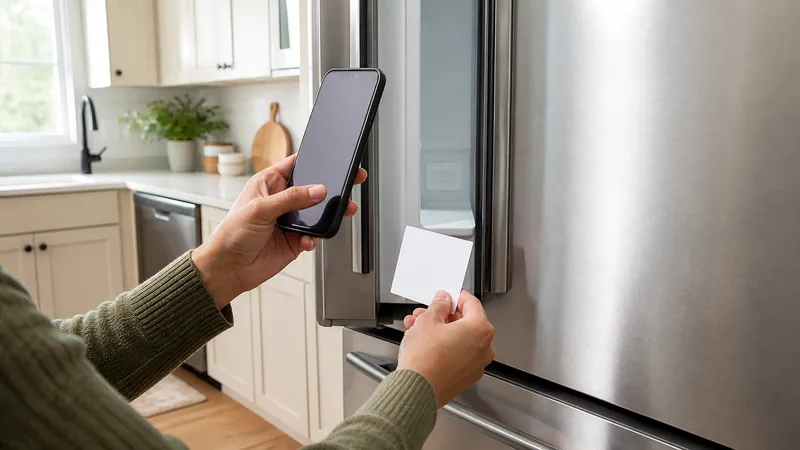
Registering an appliance warranty isn't legally required to keep coverage valid, per FTC rules — but it speeds claims and gets you recall notices.
Key takeaways
- Registration is not required to keep a US appliance warranty valid — 16 CFR 700.7 bars manufacturers from making it a condition of coverage.
- Register anyway for two real benefits: you're on the list for safety recalls, and you don't have to produce a receipt to prove purchase date later.
- Registering usually takes model number, serial number, purchase date, and retailer — all printed on the appliance's data plate and your receipt.
- Three ways to register: the manufacturer's website by model/serial, a mail-in card in the box, or a retailer account at checkout — the website is fastest and gets a confirmation email.
- HVAC compressors and some water heaters are the exception: registering within a manufacturer deadline (often 60-90 days) can add years of coverage, not just convenience.
- Treat unsolicited, high-pressure warranty sales contact cautiously; verify the offer directly with the manufacturer before sharing payment information.
Registering an appliance warranty is not legally required to keep US manufacturer warranty coverage valid — the FTC’s rule at 16 CFR 700.7 bars manufacturers from making registration a condition of an otherwise-valid warranty, so an unregistered appliance is covered exactly the same as a registered one for the same purchase date. Registering is still worth the five minutes it takes: it puts you on the list for safety recalls tied to your specific model, and it gives you a timestamped record of purchase date and ownership that saves you from digging up a receipt when something breaks. On a handful of categories — HVAC compressors and some tank water heaters — registering by a manufacturer deadline is the difference between a base warranty and a meaningfully longer one, which makes it worth more than convenience there.
How to register an appliance warranty
| Method | What it involves | Best for |
|---|---|---|
| Manufacturer’s website | Enter model/serial number, purchase date, and retailer into an online form | Fastest option; usually gives an immediate confirmation email you can save as a record |
| Mail-in card | Fill out the paper card packed in the box and mail it | Only useful if you still have the card; no confirmation until it’s processed, if at all |
| Retailer account at checkout | Some big-box and appliance retailers (Best Buy, Home Depot, Lowe’s) link a purchase to your store account automatically | Convenient if you already shop with an account, but it’s the retailer’s record, not the manufacturer’s — register with the manufacturer too for recall notices |
The manufacturer’s own website is the method worth doing even if you also used a retailer account, because recall notices and model-specific service bulletins come from the manufacturer, not the store. Search “[brand name] + register product” or check the warranty page linked from the appliance’s manual or box insert.
What you’ll need to register
| Field | Where to find it |
|---|---|
| Model number | Data plate on the appliance (inside door frame, tub edge, back panel, or near the top of a water heater tank) |
| Serial number | Same data plate, usually next to the model number |
| Purchase date | Receipt, order confirmation email, or credit card statement |
| Retailer name | Receipt or order confirmation |
| Price paid (sometimes requested) | Receipt |
Photograph the full data plate the day the appliance arrives, before it’s pushed against a wall or built into cabinetry — that single photo covers the model and serial fields permanently, even after the physical label fades.
Why register when it isn’t required
Two benefits are specific to registering, not just keeping a receipt:
Recall notices. If your model gets recalled for a safety issue, the manufacturer can only mail or email you directly if it has your information on file. Without registration, you find out only if you happen to see a news story, check the CPSC’s recall list, or the retailer’s own recall outreach reaches you (many stores do notify registered loyalty-account customers, but coverage varies).
Claims without hunting for a receipt. A registered warranty already has your purchase date, model, and serial number on file with the manufacturer. If a part fails in year two and your receipt has faded, been recycled, or was on a card statement you can’t access, a completed registration is a second, independent record the manufacturer can pull up.
Sometimes, more coverage. Trane ties its extended parts coverage on residential HVAC systems to registering within 60 days of installation — an unregistered system defaults to a shorter base warranty. Several tank water heater brands publish a similar registration window, commonly 60-90 days from install. This is the one case where registering changes the actual coverage length, not just the paperwork trail — check your specific brand’s warranty document, because the deadline and the length of the extension both vary.
When registration alone won’t fix the problem
| Situation | What to do instead of re-registering |
|---|---|
| Manufacturer denies a valid claim citing “no registration on file” | Point them to your receipt or a bank statement showing the purchase date — 16 CFR 700.7 means registration cannot be required, so a valid warranty claim with proof of purchase should stand on its own |
| You registered but never got a confirmation | Contact the manufacturer’s customer service directly and ask them to confirm the registration is on file; don’t assume the online form succeeded without an email |
| The appliance came with the house, and it’s already installed | Registration this late won’t retroactively add you to past recall notices — check the model/serial against the manufacturer’s site and the CPSC recall list directly instead |
| A “registration renewal” contact demands payment or your card number | Pause and verify directly with the manufacturer; determine whether this is product registration or a paid service contract |
This page covers whether and how to register. The receipts guide covers what to keep as proof of purchase either way, and the warranty tracking guide covers logging all four warranty fields — including registration status — in one system with reminders before each warranty expires.
Related guides
Frequently asked questions
Do I legally have to register my appliance for the warranty to be valid?
No. Under 16 CFR 700.7, part of the FTC’s rules implementing the Magnuson-Moss Warranty Act, a manufacturer cannot require you to return a registration card or complete online registration as a condition of an otherwise-valid warranty. Your warranty starts and runs from the purchase (or install) date whether or not you ever register.
What’s the actual benefit of registering if it’s not required?
Two things a receipt alone doesn’t give you: you get added to the manufacturer’s list for safety recalls and service bulletins on your specific model, and you have a timestamped confirmation of purchase date and ownership on file if you ever lose the paper receipt. For HVAC and some water heaters, registering by a deadline can also add years to the parts warranty.
What information do I need to register an appliance warranty?
Typically the model and serial number from the appliance’s data plate, the purchase date, the retailer name, and your contact information. Some manufacturers also ask for the price paid. Keep the receipt handy while you fill out the form — it has most of what you need in one place.
Where do I find my appliance’s model and serial number to register it?
Check the data plate: inside the door frame or a side wall for refrigerators, the tub edge behind the door for dishwashers, the door frame or back panel for washers and dryers, and near the top of the tank for water heaters. Photograph the full label before the appliance is installed against a wall or built into cabinetry.
Is it safe to register through a link in a text message or email about my warranty?
Go directly to the manufacturer’s official website instead of following an unsolicited warranty link. The FTC warns about high-pressure calls and mail selling extended warranties or service contracts. Verify who is contacting you and what is being sold before sharing information or paying.