
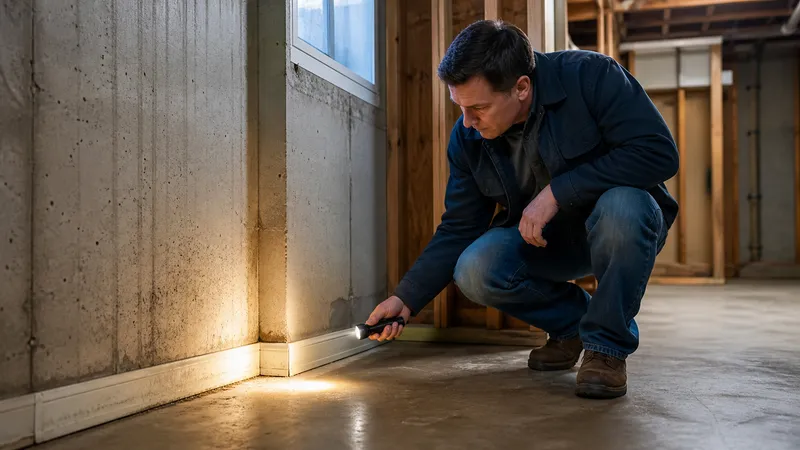
EPA guidance on what a musty basement smell means, how to trace it to hidden moisture or mold, and the fixes that clear the odor for good.
Key takeaways
- A musty smell is caused by mVOCs—gases mold releases as it grows—and the EPA treats a moldy odor as a sign to investigate, not ignore.
- You can smell mold before you can see it; the source is often behind a wall, under carpet, or inside ductwork.
- High basement humidity alone (above 60%) can smell musty even with no visible mold yet—check a hygrometer before assuming growth.
- Cardboard boxes, stored wood, and old carpet padding feed mold and hold the smell even after a spill or leak is long dry.
- Fixing the smell for good means fixing the moisture source first, then cleaning growth—air fresheners and fans only mask mVOCs.
- Stop and call a professional for mold beyond about 10 square feet, growth in HVAC ductwork, or a smell that returns after cleanup.
A musty basement smell is almost always mold or mildew giving off mVOCs—microbial volatile organic compounds released as fungi grow and digest whatever they’ve landed on. The EPA’s mold course is direct about what that means: “a moldy odor suggests that mold is growing in the building and should be investigated.” You don’t need to see a stain to have a real problem—the smell often shows up before visible growth does, because it travels through the air while the colony itself stays tucked behind a wall, under carpet, or inside a duct.
What’s actually causing the smell
| Likely cause | What else you’ll notice | Next step |
|---|---|---|
| Hidden mold or mildew growth (behind a wall, under carpet, in ductwork) | Smell is stronger near one wall or vent; may worsen when the HVAC runs | Narrow the location (see below), then see how to tell mold from mildew |
| High humidity with no visible growth yet | Hygrometer reads above 60%; surfaces feel clammy but you see no stain | Set a dehumidifier to the right target before it becomes visible growth |
| Water intrusion from grading or downspouts | Damp wall or floor only after rain; efflorescence (white chalky residue) | See basement waterproofing and leak prevention |
| Stored cardboard, wood, carpet padding, or fabric that’s been damp | Smell concentrated at a specific pile or closet, not the whole room | Discard anything that’s been wet; organic materials hold mVOCs long after they dry |
| Dry P-trap or sewer gas | Smell reads more like rotten egg or sulfur than “musty,” often near a floor drain | Pour a quart of water down unused floor drains to refill the trap; call a plumber if the smell persists |
| Dead rodent or pest nesting material | Localized, sharper smell rather than an even musty background | Check for entry points; see sealing your home against pests before winter |
Finding the source when you can’t see anything
- Check a hygrometer first. A basement reading above 60% relative humidity can smell musty on its own, per the EPA’s recommended range of below 60%, ideally 30-50%. If it’s already in range, keep looking for a localized source instead of assuming humidity is the whole story.
- Walk the room after a rain, not on a dry week. Water-driven smells are strongest within a day or two of precipitation.
- Sniff corners and low spots individually. The smell is usually strongest close to the actual growth, not evenly spread through the room.
- Check behind and under stored items—boxes, furniture legs, carpet edges, and inside closets are where airflow is worst and moisture lingers longest.
- Look at duct boots and the sump pit. A musty smell that gets stronger when the HVAC blower kicks on points to growth inside the ductwork or a return that pulls basement air through the house.
Fixing it for good, not just for today
| Step | What it solves | Where to go deeper |
|---|---|---|
| Fix the moisture source (grading, downspouts, or a French drain if needed) | The reason the space stays damp in the first place | Basement waterproofing and leak prevention |
| Set a dehumidifier to the right target and verify with a hygrometer | Ambient humidity that feeds mold even without a leak | Best dehumidifier setting to prevent mold |
| Remove and discard damp cardboard, wood scraps, and old carpet padding | Organic material that holds mVOCs and feeds regrowth even after the space dries | — |
| Clean visible growth under about 10 square feet yourself with detergent and water | Small, contained patches, per EPA cleanup guidance | How to tell mold from mildew for what you’re looking at first |
| Improve air movement (a fan, a cracked interior door, a dehumidifier’s own circulation) | Stagnant pockets where humidity sits highest | — |
A smell that fully clears once you’ve fixed the moisture source and cleaned what’s visible confirms you found the right cause. A smell that fades and comes back within a season usually means the underlying moisture problem—grading, a downspout, or basement humidity—was never actually corrected, only cleaned over.
When to call a professional
| Situation | Why it is not DIY |
|---|---|
| Visible mold covers more than roughly 10 square feet | Past the size the EPA considers homeowner-manageable; disturbing it risks spreading spores |
| Smell is strongest near HVAC ductwork or gets worse when the blower runs | Duct-borne mold recirculates through the whole house and needs HVAC-specific remediation |
| The smell returns within weeks of cleaning | Signals the moisture source was never actually fixed—needs a proper diagnosis, not another wipe-down |
| Smell reads like sewer gas or rotten egg rather than musty and persists after refilling floor drain traps | Points to a plumbing venting problem, not mold |
| A household member has asthma, allergies, or a compromised immune system | Health risk changes how quickly and thoroughly the source needs to be confirmed and addressed |
Related guides
Frequently asked questions
Can a basement smell musty without any visible mold?
Yes. High relative humidity condensing on cool concrete, damp cardboard or wood, or early mold growth hidden behind a wall or under flooring can all produce a musty smell before anything is visible on a surface you can see. The EPA treats a moldy odor itself as reason to investigate further, not something to wait out.
Is a musty basement smell dangerous?
The smell itself—mVOCs, or microbial volatile organic compounds released as mold grows—has been linked to headaches, and irritation in sensitive people, according to indoor air quality research the EPA cites, but it isn’t the same hazard as mold spores or a gas leak. Treat it as a signal to find and fix the moisture source, and get it checked sooner if anyone in the house has asthma or allergies.
Will a dehumidifier get rid of a musty basement smell?
It helps if humidity is the whole story, but it won’t fix a smell caused by an active leak, standing water, or mold already growing in a wall cavity or under carpet. Run a hygrometer first: if the basement reads above 60% and there’s no visible water or stain, a dehumidifier set to the right target is often enough. See best dehumidifier setting to prevent mold for the number to use.
How do I find where a musty smell is coming from if I can’t see anything?
Walk the basement perimeter after a rain, checking behind stored items, inside closets, under carpet edges, and near any duct boots or the sump pit. Sniff corners individually—the smell is often stronger near the actual source than in the middle of the room—and check for cardboard, wood, or fabric that’s been damp and never fully dried.
Does cleaning the mold I can see get rid of the smell for good?
Only if you also fix what made it damp in the first place. Wiping down a visible patch without correcting the grading, downspout, or humidity problem behind it usually means the smell—and the growth—comes back within a season.