
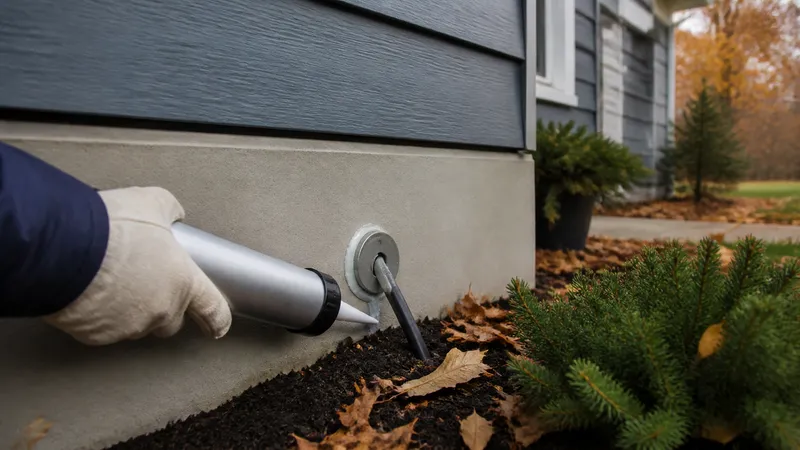
A 1/4-inch gap lets in mice; 1/16 inch lets in insects. Extension-sourced steps to seal entry points before fall's overwintering pests move in.
Key takeaways
- Insects and spiders can use gaps as small as 1/16 inch; a 1/4-inch gap (pencil-width) is enough for mice, and 1/2 inch is enough for rats.
- Stink bugs, boxelder bugs, and lady beetles pick overwintering sites during warm September and October afternoons — seal before then, not after they're already inside.
- Caulk, expanding foam, steel wool, and copper mesh handle small gaps; 1/4-inch or smaller wire hardware cloth covers vents and larger openings.
- Door sweeps, threshold seals, and new window screens close the largest and most obvious entry points most homes have.
- Sealing keeps out ants, mice, and overwintering insects, but it does not stop subterranean termites, which travel through soil, not gaps in your siding.
- Move firewood, mulch, and dense mulch beds away from the foundation — a dry perimeter gives fewer pests a reason to stage near your walls.
Sealing a home against pests before winter means closing every gap larger than 1/16 inch with the right material for its size — caulk or foam for hairline cracks, steel wool or copper mesh for utility penetrations, and 1/4-inch wire hardware cloth for anything a mouse or larger opening could exploit — completed before fall’s overwintering insects pick their spots in September and October, according to University of Kentucky Extension and University of California ANR. Do this once a year, before the first cold snap, and most of the “why are there bugs in my kitchen in November” problem never starts.
Gap size to pest: what you’re actually keeping out
| Gap size | Who gets through | Source |
|---|---|---|
| 1/16 inch or less | Ants, spiders, most small insects | University of Kentucky Extension |
| 1/4 inch (pencil-width) | Mice | University of Kentucky Extension |
| 1/2 inch | Rats | University of Kentucky Extension |
| Larger than 1/4 inch (vents, larger openings) | Needs 1/4-inch or smaller wire hardware cloth, not foam alone | University of Kentucky Extension |
That table is the reason a bead of caulk you can barely see matters: it’s not cosmetic, it’s the line between an insect getting a foothold and not.
Where to check, and what to use
| Entry point | What to look for | Seal with |
|---|---|---|
| Foundation and siding gaps, utility penetrations (pipes, wires, cable lines) | Any visible gap around where a line enters the house | Caulk, cement, urethane expanding foam, steel wool, or copper mesh |
| Window and door frames | Cracked or missing weatherstripping, visible daylight around the frame | Silicone or acrylic latex caulk; new weatherstripping |
| Door bottoms | Light visible under the door, worn or missing sweep | Door sweep or threshold seal |
| Garage doors | Gaps at the bottom seal or side jambs | Rubber garage door seal |
| Sliding glass doors | Gaps at the track or frame | Foam weatherstripping |
| Vents (foundation, soffit, dryer, attic) | Torn, missing, or oversized mesh | 1/4-inch or smaller wire hardware cloth |
| Window and door screens | Tears, gaps at the frame edge | Repair or replace the screen |
| Chimney and roofline joints | Gaps where flashing meets siding, damaged mortar | Cement, flashing repair, or a call to a mason/roofer for larger gaps |
Sources: University of Kentucky Extension pest-proofing guide; UC ANR: Winter Invaders
Timing: seal before the warm afternoons of fall
University of California ANR’s Urban IPM program notes that stink bugs, boxelder bugs, and lady beetles pick their overwintering sites during warm September and October afternoons — the same period you’ll often see them clustered and sunning on south- and west-facing exterior walls. That clustering is a visible cue, not a coincidence: it’s when they’re actively searching for the crack or gap they’ll spend winter in. Sealing before or during that window keeps them from choosing your house; sealing after means you’re closing the door on pests that already picked a spot in your wall void.
A practical order of operations:
- Walk the exterior on a sunny fall afternoon. Look specifically for insects massing on warm walls — that tells you where the pressure is highest this year.
- Seal the small stuff first. Caulk, foam, and mesh around pipes, wires, and cable entries — these are the most common and easiest-missed gaps.
- Check doors and windows. Replace worn weatherstripping, install or replace door sweeps, repair torn screens.
- Cover vents with hardware cloth if the existing mesh is torn, missing, or has openings larger than 1/4 inch.
- Clear the perimeter. Move firewood, dense mulch, and leaf piles away from the foundation. Damp organic material against the house gives pests both moisture and cover right at your entry points.
When to call a professional
| Situation | Why it’s not DIY |
|---|---|
| You’ve sealed the obvious gaps but pests keep getting in | A pest control company can pressure-test or dye-test the exterior to find entry points you can’t see from ground level |
| A gap involves chimney flashing, roofline joints, or anything requiring a roof or high ladder | Fall risk — treat it like any other roof-adjacent repair and bring in a roofer or mason |
| You suspect rodents are already established (droppings, gnaw marks, grease trails) | Sealing entry points before removal can trap animals inside; see Scratching Noises in the Walls or Attic for the identify-before-you-seal order of operations |
| You found termite mud tubes or frass while checking the foundation | Different problem, different fix — see Signs of a Termite Infestation Before It’s Serious |
| Large structural gaps at the sill plate or foundation | May indicate settling or rot that needs a contractor’s assessment before it’s just “sealed over” |
Related guides
Frequently asked questions
What size gap can pests actually get through?
University of Kentucky Extension puts it in concrete terms: gaps of 1/16 inch or less let in insects and spiders, a 1/4-inch gap (about the diameter of a pencil) is large enough for mice, and a 1/2-inch gap is adequate for rats. Anything larger than 1/4 inch should get sealed with hardware cloth or sheet metal, not just caulk.
When is the best time of year to seal a home against pests?
Before fall’s overwintering insects pick their sites. University of California ANR notes that stink bugs, boxelder bugs, and lady beetles select overwintering spots during warm September and October afternoons, when you can often see them massing on sunny exterior walls. Sealing before that window keeps them from getting inside in the first place, rather than trying to evict them from wall voids once they’re in.
What should I use to seal gaps around pipes, wires, and vents?
University of Kentucky Extension recommends caulk, cement, urethane expanding foam, steel wool, or copper mesh for small utility penetrations, and silicone or acrylic latex caulk for cracks around window and door frames. For vents and any opening larger than about 1/4 inch, use 1/4-inch or smaller wire mesh (hardware cloth) instead of foam alone, since foam won’t stop a determined rodent.
Does sealing my house also keep out termites?
No. Sealing entry points reduces insects, spiders, mice, and rats that need an above-ground gap to get in, but subterranean termites travel through the soil and build shelter tubes to reach wood without ever crossing open air. See Signs of a Termite Infestation Before It’s Serious for how to check for termites separately.
Do steel wool and dryer sheets in gaps actually work?
Steel wool packed tightly into a small gap is a legitimate short-term barrier that rodents generally won’t chew through, and it’s a reasonable stopgap before a permanent seal. Dryer sheets, mothballs, and similar folk remedies are not supported by extension entomology guidance as a reliable barrier — treat them as unproven and seal the gap properly instead.