
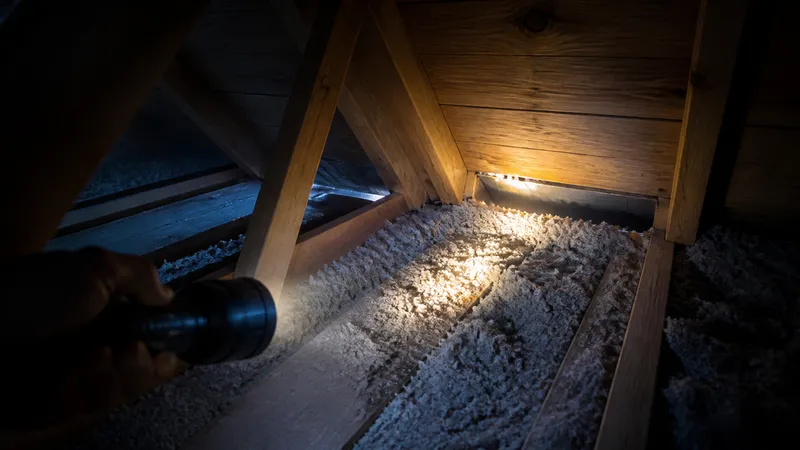
Scratching or scurrying in the attic or walls is almost always wildlife, not settling. Identify the animal by sound and timing, then know what to do next.
Key takeaways
- Repeated scratching or scurrying is almost always an animal, not settling. Settling causes occasional pops and creaks, not a repeating pattern.
- Timing narrows the suspect: raccoon activity is mostly daytime, mice and rats are mostly nighttime, and tree squirrels are mostly nighttime in the attic per Illinois DNR.
- Never seal the entry hole before confirming the animal is out. Sealing an active den traps it inside and can leave you with a dead animal in the wall.
- Test an entry hole for at least a couple of days with loose newspaper or tape over it before you or a contractor seal anything permanently.
- Call a wildlife control operator, not a general pest control company, for raccoons, squirrels, or any animal you cannot identify with certainty.
- A sudden foul odor after scratching stops usually means the animal died inside. That is a professional job, not a DIY cleanup.
Scratching, scurrying, or scrabbling sounds in the walls or attic—especially at night—are almost always a wildlife entry, not the house settling. Settling shows up as occasional pops, creaks, or a crack that widens slowly with temperature swings. It does not sound like a repeated scratching pattern, and it does not move across the ceiling or down a wall. If you’re hearing the same kind of noise more than once, especially at a consistent time of day, you have an animal in the building, and the next steps are identification, then safe removal—not sealing the hole shut on the first weekend you have free.
What animal is it likely? Sound and timing guide
Illinois DNR’s Wildlife Illinois program, developed with University of Illinois Extension, publishes a straightforward identification guide based on the sound and when you hear it. Use it as your first filter.
| What you hear | Timing | Likely animal | Source |
|---|---|---|---|
| Loud vocalizations, thumping, or scratching in the attic or walls | Mainly during the day | Raccoon | Wildlife Illinois |
| Small scratching sounds, or a small animal running | Especially at night | Mice or rats | Wildlife Illinois |
| Scurrying, bumps, or muffled movement in the attic or walls | Mainly at night | Tree squirrel | Wildlife Illinois |
| High-pitched chirps or small rustling, often barely audible through insulation | Any time | Bats | Wildlife Illinois |
| Noise specifically from the chimney flue | Any time | Birds, tree squirrels, or raccoons | Wildlife Illinois |
| Scratching or chewing at the base of interior walls | Any time | Mice, rats, chipmunks, or ground squirrels | Wildlife Illinois |
A few practical notes on top of that table. Raccoons that den in an attic are often quietest overnight while they’re out foraging, then noisiest during the day while resting and shifting position—which is why daytime thumping is the tell, not nighttime activity like you might expect. If the sound is loud, heavy, and paired with visible sagging insulation or a wide gap at the roofline, assume the larger animal (raccoon) rather than the smaller one until you can rule it out. Soft, kitten-like mewing mixed with the thumping in spring or early summer often means a raccoon has had a litter in the attic, which changes the removal approach.
Why it’s (almost certainly) not settling
Wood-frame houses do move: framing expands and contracts with temperature and humidity, and that can produce a pop, tick, or a single sharp crack, usually near a temperature swing (furnace kicking on, a hot afternoon, a cold snap overnight). What settling does not produce is a sustained scratching or scurrying sound that repeats over multiple nights, moves along a path (attic to wall to soffit), or is accompanied by any of these:
- Droppings near the attic hatch, in insulation, or along a wall base
- A greasy rub mark at a gap where siding, fascia, or a roofline vent meets the wall
- A new gap, chewed hole, or bent vent screen you didn’t create
- A smell of urine or must in the attic that wasn’t there before
Any one of those, combined with a repeating noise, means an animal has a way in and is using it.
Safe next steps: find the entry point, don’t seal it yet
Cornell IPM’s recommended check is simple and low-cost: loosely tape a flap of newspaper, cardboard, or duct tape over the suspected entry hole and watch it for a couple of days. If it’s pushed open or torn from either side, the hole is still active and nothing gets permanently sealed yet. Cornell also flags two timing traps: in winter, a den can look inactive simply because the animal is dormant, then reappear in spring; and during breeding season, young animals inside can complicate exclusion, since a one-way door can separate a mother from nursing young still inside.
The order that avoids trapping an animal in your wall: identify the likely species from the table above, find the entry point from outside, monitor it for continued activity, then install a one-way exclusion door or trap sized for that species before any permanent sealing happens.
When to call a professional
| Situation | Why it is not DIY |
|---|---|
| Suspected raccoon, or any animal larger than a mouse or small rat | Raccoons can be aggressive when cornered, may carry rabies or roundworm, and removal often involves handling young—this is a wildlife control operator’s job, not a homeowner trap-and-release |
| Entry point is on a steep roof, high soffit, or otherwise hard to reach safely | Fall risk—the same reason roof and gutter work generally isn’t a DIY job from a ladder |
| A foul, persistent odor after the scratching has stopped | Strong sign of a dead animal inside a wall or attic cavity; removal and cleanup require opening the cavity and handling decomposition safely |
| Scratching or activity returns within weeks of a first removal or exclusion attempt | Points to a missed young animal, a second entry point, or an exclusion that wasn’t sealed correctly—needs a follow-up inspection, not a repeat DIY attempt |
| You cannot identify the animal with confidence from sound alone | Misidentifying a raccoon as a squirrel (or the reverse) leads to the wrong trap, the wrong timing, and a higher chance of trapping young inside |
A wildlife control operator is the right call for anything above—not a general pest control company, which is typically set up for insects rather than trapping and legally handling vertebrate wildlife. Many state wildlife agencies, including Illinois DNR, maintain guidance on hiring a licensed operator and on what a homeowner can reasonably attempt with smaller nuisance species; when in doubt about the species or the law in your state, that agency page is the right place to check before you set a trap yourself.
For repair work that follows animal removal—vent covers, soffit repair, roofline sealing—see the systems hub for related house-systems guides.
Related guides
Frequently asked questions
Is scratching in the walls just the house settling?
Rarely. Settling produces occasional pops, creaks, or cracks tied to temperature swings, not a repeating scratching, scurrying, or scrabbling sound. If you hear the same kind of noise on more than one occasion, especially at a consistent time of day or night, treat it as an animal until you rule that out.
How can I tell what animal is in my attic or wall?
Timing and sound type are the two clues. Loud thumping or scratching mostly during the day points to a raccoon. Small, fast scratching or running mostly at night points to mice or rats. Scurrying or muffled movement mostly at night in the attic points to a tree squirrel, according to Illinois DNR’s Wildlife Illinois program.
Why shouldn’t I just seal up the hole where the animal is getting in?
If an animal is currently living inside, sealing its entry point traps it. Cornell’s Integrated Pest Management program advises confirming a hole is inactive for at least a couple of days, using a loose flap of newspaper or tape over the opening as a monitor, before permanently sealing anything an animal might still be using.
Do I need pest control or wildlife removal for scratching noises?
Wildlife removal, not standard pest control. General pest control companies are set up for insects; raccoons, squirrels, and other vertebrate wildlife typically require a wildlife control operator who can trap, exclude, and legally handle the species involved.
What if the scratching just stops on its own?
Don’t assume the animal left through the same hole it used to enter. It may still be denning, or it may have died inside. If the noise stops and is followed by a foul odor, treat that as a dead animal in the wall or attic and call a professional rather than opening the wall yourself.