
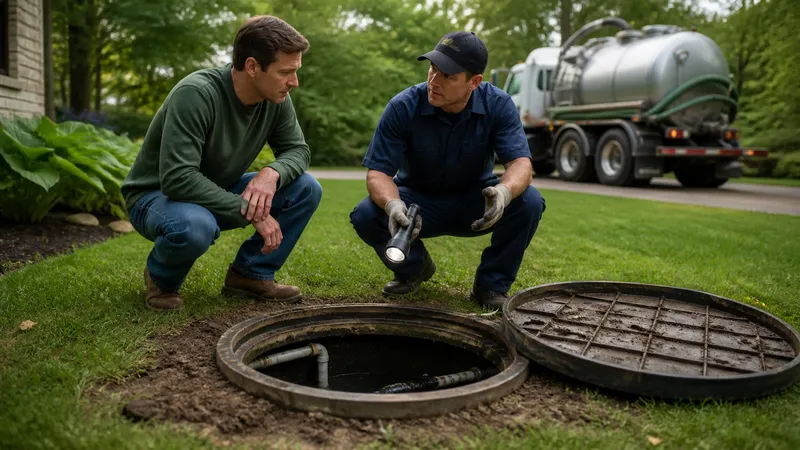
EPA guidance: inspect a septic system every 1-3 years, pump every 3-5 years. The real pumping-frequency table, what never to flush, and drainfield care.
Key takeaways
- EPA: have a septic system inspected every 1-3 years and the tank pumped every 3-5 years—exact timing depends on household size and tank size.
- A $250-300 pump-out every few years is EPA's own comparison against a $3,000-7,000 drainfield repair or replacement.
- Only flush human waste and toilet paper. Wipes, grease, coffee grounds, cat litter, and household chemicals are the top causes of tank and drainfield failure.
- Spread laundry loads across the week instead of running several in one day—flooding the tank with water at once pushes solids into the drainfield.
- Never park, drive, build, or plant deep-rooted trees over the drainfield. Roots and compacted soil are two of the most common ways homeowners cause their own repair bill.
- Bright green spongy grass, standing water, or a sewage smell over the drainfield means stop and call a septic professional, not a DIY fix.
A septic system needs two recurring services: an inspection every 1 to 3 years and a tank pump-out every 3 to 5 years, according to the U.S. EPA’s SepticSmart program. The exact interval isn’t the same for every house—it depends on how many people live there, how much wastewater they generate, and how large the tank is. Skipping both is how a routine service call turns into a drainfield replacement, which is the expensive failure a septic system can have.
Pumping frequency by household size and tank size
EPA’s own materials describe the four factors above but don’t publish a single lookup table. The table below—commonly used by septic professionals and published by Penn State Extension—converts those factors into an estimate for a year-round household with no garbage disposal in regular use. Treat it as a planning estimate; the professional measuring your tank’s actual scum and sludge levels at each service has the final word.
| Tank size | 2 people | 4 people | 6 people | 8 people |
|---|---|---|---|---|
| 750 gallons | ~4.2 years | ~1.8 years | ~1.0 year | ~0.6 years |
| 1,000 gallons | ~5.9 years | ~2.6 years | ~1.5 years | ~1.0 year |
| 1,500 gallons | ~9.1 years | ~4.2 years | ~2.6 years | ~1.8 years |
| 2,000 gallons | ~12.4 years | ~5.9 years | ~3.7 years | ~2.6 years |
A running garbage disposal, a hot tub or pool drained into the system, or several teenagers doing laundry on the same day all push a household toward the shorter end of its row. If you don’t know your tank’s size, a septic professional can measure it at the same visit as your next inspection.
What actually goes wrong without maintenance
The tank is not the expensive part to fix. The drainfield—the buried network of perforated pipe that lets treated wastewater soak into the soil—is. Once solids or excess liquid reach the drainfield and clog the soil around the pipes, there’s no cost-effective repair; the field usually has to be replaced.
| Skipped maintenance | What it costs |
|---|---|
| Routine pump-out and inspection | EPA: $250-300 every 3-4 years is a typical regular maintenance fee |
| Malfunctioning system, up to full drainfield repair or replacement | EPA: $3,000-7,000, compared directly against the routine maintenance fee above |
That gap—a few hundred dollars every few years versus a multi-thousand-dollar field replacement—is EPA’s own framing for why pumping on schedule is worth it, not a marketing number from a pumping company.
Never put this down a drain or toilet
| Category | Specific items | Why it’s a problem |
|---|---|---|
| Non-degradable solids (“cloggers”) | Wipes (including ones labeled flushable), diapers, feminine hygiene products, dental floss, cigarette butts, cat litter, paper towels | EPA: these accumulate as solids and don’t break down, filling the tank faster and clogging the drainfield |
| Fats, oils, and grease | Cooking grease, oil, butter, heavy cream, cheese | Solidifies and adds to the scum layer, which requires the tank to be pumped sooner |
| Chemicals (“killers”) | Gasoline, oil, pesticides, antifreeze, paint, paint thinner, large volumes of bleach or disinfectant | EPA: these can kill the bacteria that digest waste in the tank, and can pollute groundwater if they reach the drainfield |
| Excess water at once | Several loads of laundry back to back, hot tub or pool water dumped into the system | Floods the tank faster than it can settle solids, pushing them into the drainfield |
| Coffee grounds, food scraps | Especially from a garbage disposal | Adds solids directly to the tank; EPA and extension guidance both recommend limiting disposal use on a septic system |
An easy rule of thumb, straight from EPA’s homeowner guide: only human waste and toilet paper belong in a septic system. For a slow drain that isn’t a septic-specific issue, Why Is My Drain Slow but Not Fully Clogged? covers why EPA recommends boiling water or a drain snake over chemical drain openers—the same warning applies here, since chemical cleaners can also disrupt the bacteria a septic tank depends on.
Space out water use instead of running it all at once
Every gallon that goes down a drain in the house ends up in the septic tank, and from there, in the drainfield. EPA estimates average indoor water use at about 70 gallons per person per day in a typical single-family home—more than 225 gallons a day for a household of four, according to extension research. The system is sized to handle that steadily, not all in a burst.
- Spread laundry across the week rather than running several loads back to back. EPA specifically warns that doing all a household’s laundry in one day “doesn’t allow your septic tank time to adequately treat waste and could potentially flood your drainfield.”
- Fix leaks promptly. A single leaking toilet can waste up to 200 gallons a day, and a faucet leaking one drop per second adds roughly 3 gallons a day—all of it flowing into the same tank.
- Route hot tubs, pools, and water softener discharge away from the septic system where local rules allow it, since a sudden large volume of water agitates settled solids and pushes them toward the drainfield.
When to call a professional
| Situation | Why it’s not DIY |
|---|---|
| Tank inspection or pumping itself | Always a professional service—EPA warns never to enter a septic tank yourself; sewer gases inside can be lethal |
| Soggy ground, standing water, or bright green, unusually lush grass over the drainfield, even in dry weather | Classic EPA-listed signs of a failing drainfield, which needs professional diagnosis before it gets worse |
| Sewage odor outdoors near the tank or drainfield | A strong odor at the system is one of EPA’s listed failure signs, not a smell to wait out |
| Slow drains throughout the house, or wastewater backing up into multiple fixtures | Points to the tank or drainfield rather than one clogged drain—see the difference in Why Is My Drain Slow but Not Fully Clogged? |
| A septic alarm sounding, or an effluent/sewage pump failing on a system that has one | Alternative systems with pumps or electrical float switches need professional inspection at least annually, and an alarm means the system needs attention now |
Visit the home systems maintenance hub for the rest of the systems cluster, including plumbing, well water, and water softener maintenance.
Related guides
Frequently asked questions
How often should a septic tank be pumped?
The EPA recommends pumping every 3 to 5 years for a typical household system, but the exact interval depends on tank size, household size, and how much wastewater and solids the household generates. Larger households and smaller tanks need more frequent pumping; a septic professional measures the actual scum and sludge layers at each service to confirm the timing.
How do I know if my septic tank needs pumping now instead of on a schedule?
A septic professional checks this directly: if the scum layer’s bottom is within 6 inches of the tank’s outlet, or the sludge layer’s top is within 12 inches of the outlet, per EPA guidance, it’s time to pump regardless of the calendar. That’s also why a schedule from a table is a starting point, not a guarantee.
What should never go down a drain or toilet on a septic system?
Only human waste and toilet paper belong in a septic system. Never flush wipes (including ones labeled flushable), feminine hygiene products, dental floss, diapers, cigarette butts, coffee grounds, cat litter, or pharmaceuticals, and never pour cooking grease, oil, paint, solvents, or pesticides down any drain—these are EPA’s specific list of septic system cloggers and bacteria killers.
Can I plant trees or park over my septic drainfield?
No. EPA guidance says to never park or drive on the drainfield, since the weight can crush pipes and compact soil, and to keep deep-rooted trees a safe distance away, since roots grow toward the moisture and can invade and block the pipes. A septic professional can tell you the safe planting distance for your specific system and landscape.
What’s the difference between septic tank pumping and a septic system inspection?
Pumping removes the accumulated sludge and scum from the tank itself. An inspection is broader: a professional checks the tank’s scum and sludge levels, the baffles and any effluent filter, and the condition of the drainfield, then reports whether pumping is due and whether anything needs repair. EPA recommends inspection every 1-3 years even in years when pumping isn’t needed yet.