
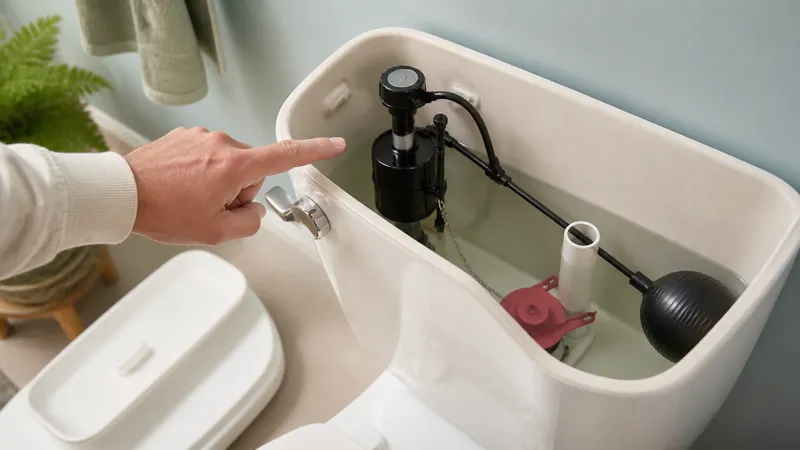
A running toilet is almost always the flapper, the fill valve, the float, or a cracked overflow tube. Here's how to tell which and fix it today.
Key takeaways
- A running toilet has one of four causes: a flapper that won't seal, a fill valve that won't shut off, a misadjusted float, or a cracked overflow tube.
- Water trickling into the bowl with the lid off and tank full points to the flapper. Water audibly hissing or refilling in a loop points to the fill valve.
- EPA WaterSense: the average household's leaks waste over 9,300 gallons a year, and toilets are usually the culprit.
- The water level should sit about 1/4" to 1/2" below the top of the overflow tube—higher than that and the tube drains the excess constantly.
- A worn flapper is a $5-15 part and a 10-minute fix. Don't replace the whole fill valve until you've ruled out the flapper first.
- Stop and call a plumber if the shutoff valve at the wall won't close, or if you see a crack in the tank or bowl itself.
A toilet that runs constantly is almost always one of four things: a flapper that isn’t sealing the flush valve, a fill valve that isn’t shutting off, a float set too high, or a cracked overflow tube draining water as fast as the tank fills. Take the tank lid off and watch one full flush cycle—what you see points straight to the fix. EPA WaterSense reports that the average household’s leaks waste more than 9,300 gallons of water a year, and toilets are usually the culprit.
Which part is actually failing
| What you notice | Likely cause | Fix |
|---|---|---|
| Faint trickle or hiss into the bowl minutes after the tank goes quiet | Flapper not sealing—worn, warped, or mineral buildup on the seat | Replace the flapper, matched to your toilet’s flush valve size (2” or 3”) |
| Fill valve keeps hissing, cycling on and off, or never fully stops | Fill valve won’t shut off—debris in the valve or a worn diaphragm | Shut off water, flush to drain the tank, flush debris from the valve inlet; replace the valve if it still won’t seat |
| Water audibly pouring into the overflow tube the whole time the tank is “full” | Float set too high, so the fill valve never reads “full” | Lower the float per your model (screw or clip adjustment) until the water sits 1/4” to 1/2” below the top of the overflow tube |
| Water level looks correct but the tank never stops filling, or you can hear water running down inside the tube itself | Overflow tube cracked or the refill tube is dumping too much water into it | Replace the overflow tube/flush valve assembly; if the tank shell itself is cracked, stop and call a plumber |
The 15-minute diagnosis
- Shut off the water at the valve behind the toilet, then flush to empty the tank.
- Turn the water back on and watch the tank refill with the lid off.
- If the water rises past the rim of the overflow tube and drains down inside it instead of shutting off, the fill valve or float is the problem—Fluidmaster’s fill valve guide walks through flushing debris out of the valve before replacing it.
- If the tank fills correctly, goes quiet, and then you hear a trickle or the level in the bowl creeps up on its own a few minutes later, the flapper is not sealing. EPA WaterSense’s toilet-leak guidance points to worn or warped flappers as the most common cause of toilet leaks, degraded over time by chlorine and hard water.
- Still unsure whether it’s a slow leak versus a full-on running toilet? Add a few drops of food coloring to the tank and wait 10 minutes without flushing. Color in the bowl means the flapper is leaking even when the toilet looks “off.”
- If the fill valve won’t shut off no matter what, and the water is pouring straight into the overflow tube at a fixed level regardless of the float, check the tube itself for a hairline crack—this is less common but it presents identically to a bad fill valve until you look closely.
Fixing the flapper
Most flappers are a snap-off, snap-on part with no tools required. Shut off the water, flush to drain the tank, unhook the flapper from the two pegs (or the chain clip) at the base of the overflow tube, and take it to the hardware store to match by size and shape—flush valves are commonly 2” or 3”. A new flapper runs $5–15 and seats in minutes. If the chain is too long, the flapper can’t seat fully closed; if it’s too short, it can hold the flapper open. There should be a small amount of slack, not tension, when the flapper is down.
Fixing the fill valve and float
If flushing debris from the fill valve inlet doesn’t stop the running, replace the whole valve—a $10–25 part that most homeowners can swap with the water off, following the kit’s instructions for your tank’s overflow tube height. On adjustable-float valves, American Standard’s fill valve guidance sets the target water line at about 1/4” to 1/2” below the top of the overflow tube—turn the adjustment screw clockwise to raise the level or counterclockwise to lower it, or slide a float-cup clip up or down, then flush to confirm.
When to call a professional
| Situation | Why it is not DIY |
|---|---|
| The wall shutoff valve won’t turn or won’t fully stop the water | A stuck or seized shutoff needs replacement, often with the water main involved |
| Visible crack in the tank or bowl | Porcelain doesn’t patch; a cracked tank can fail suddenly |
| Water actively overflowing onto the floor | Stop the leak first—shut the wall valve, then diagnose |
| You’ve replaced the flapper and fill valve and it still runs | Points to a bad flush valve seat or tank-to-bowl gasket, a bigger teardown |
| Toilet is bolted to an older cast-iron or unusual flush valve system | Parts and fit vary; a plumber can match obsolete hardware faster |
Keep a record of what you replaced
Related guides
Frequently asked questions
Why does my toilet keep running after I flush?
Almost always one of four things: the rubber flapper isn’t sealing the flush valve, the fill valve isn’t shutting off once the tank refills, the float is set too high, or the overflow tube is cracked and draining water as fast as the tank fills. Lift the tank lid and watch a flush cycle to see which one is happening.
How do I tell if it’s the flapper or the fill valve?
Watch the tank after it refills and goes quiet. If water is still trickling from the flush valve at the bottom into the bowl, it’s the flapper. If the fill valve itself keeps hissing or cycling on and off, or water is pouring into the overflow tube, the fill valve or float is the problem.
How much water does a running toilet waste?
EPA WaterSense reports that the average household’s leaks waste more than 9,300 gallons of water a year, and a worn flapper alone can leak thousands of gallons annually. A toilet that’s audibly running rather than silently leaking wastes water even faster.
Do I need a plumber to fix a running toilet?
Usually no. Replacing a flapper or a fill valve is a homeowner-level repair with the water shut off at the wall. Call a plumber if the shutoff valve won’t close, the tank or bowl is cracked, or water is actively overflowing onto the floor.
How often should I replace a toilet flapper?
EPA WaterSense recommends checking flappers periodically and replacing them at least every five years, since chlorine, hard water, and normal wear degrade the rubber. Replace sooner if you see mineral buildup, warping, or a flapper that no longer sits flat.