
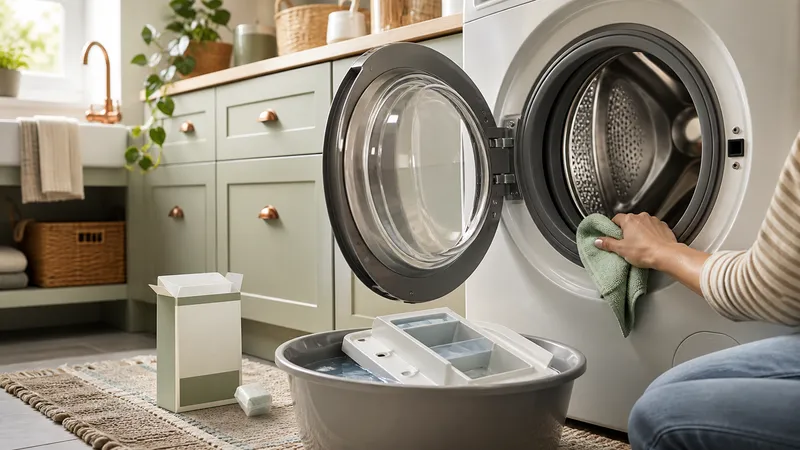
Washing machine maintenance: monthly cleaning cycle, gasket mold prevention, detergent drawer cleaning, hose checks, and balance—plus when to call a pro.
Key takeaways
- Run a hot-water clean cycle with a washer cleaner tablet once a month, per Whirlpool's affresh guidance.
- Leave the door cracked open between loads and wipe the gasket dry to stop front-load mold before it starts.
- Pull the detergent dispenser drawer and rinse it every 2–4 weeks; sooner with hard water or heavy use.
- A washer that walks or bangs during spin is usually unlevel or overloaded, not a failing motor—check the feet first.
- Supply hoses get a quick monthly look here; the 5-year swap schedule has its own deep-dive page.
Washing machine maintenance comes down to four repeating jobs: a monthly hot-water cleaning cycle for the drum, regular wipe-downs of the door gasket and detergent drawer to stop mold, a quick check that the machine is level and not overloaded, and an occasional look at the supply hoses. None of it takes more than a few minutes a month, and skipping it is why washers start to smell, leak, or walk across the laundry room floor. This page is the general maintenance rundown for any washer, top-load or front-load. The hose deep-dive covers the 5-year replacement schedule in full, and the washing machine lifespan guide covers how long the whole machine should last.
The washing machine maintenance schedule at a glance
| Task | Cadence | Why it matters |
|---|---|---|
| Run a hot-water clean cycle with washer cleaner | Monthly, or when the clean-washer light comes on | Removes detergent and soil buildup from the tub, pump, and hidden hoses (Whirlpool) |
| Wipe the door gasket dry; leave the door cracked open | After every load or two | Front-load seals trap moisture, which is what mold needs to grow |
| Rinse the detergent dispenser drawer | Every 2–4 weeks; sooner with hard water or heavy use | Detergent and mineral residue clog compartments and grow mold (Whirlpool) |
| Check the machine is level and the load is balanced | Whenever it vibrates, walks, or bangs | Unlevel or overloaded machines strain the suspension and can damage the floor |
| Clean the lint or self-clean filter (if your model has one) | Monthly, or per the manual | Prevents drain clogs and slow spins |
| Inspect supply hoses for bulges, cracks, or leaks | Monthly glance; full swap every 5 years | See the hose replacement guide for the full interval and inspection steps |
Monthly clean-washer cycle: drum and tub
The parts you never see—the tub exterior, pump, valves, drain, and recirculation hoses—collect detergent film and soil over time, and a regular wash cycle doesn’t reach them. Whirlpool recommends running the Clean Washer cycle roughly once a month, or as soon as the clean-washer indicator lights up or the machine starts to smell (Whirlpool affresh instructions). If a machine has no dedicated cycle, the manual’s fallback is the hottest water temperature and highest water level the machine offers.
The process is simple:
- Empty the drum completely—no clothes, no leftover socks.
- Drop one washer cleaner tablet (affresh or an equivalent) directly into the drum, not the detergent dispenser.
- Start the clean cycle and let it run uninterrupted; don’t open the door mid-cycle.
- When it finishes, leave the door open so the interior air-dries instead of sitting damp.
Hard water and heavy use both shorten that interval—if you notice film on the drum or a sour smell before a month is up, run the cycle again rather than waiting for the calendar date.
Front-load gasket: the mold problem top-loaders don’t have
Front-load washers seal the door against a rubber gasket, and that tight seal is exactly what traps the moisture and detergent residue mold needs. Two habits prevent most of it:
- Leave the door cracked open between loads. A sealed, damp drum with no airflow is a mold incubator; an open door lets it dry out.
- Wipe the gasket folds dry after washing, especially the bottom fold where water pools. A dry cloth after the last load of the day is enough—no special product required.
If mold has already set in, a diluted bleach or a washer-safe mildew remover applied directly to the gasket folds (per the label) clears visible growth; the prevention habits above are what stop it from coming back.
Detergent drawer and dispenser cleaning
The detergent and fabric-softener dispenser is a small, mostly hidden reservoir, and it stays wet between loads—so residue and mold build up there just as readily as in the gasket. Whirlpool’s guidance for front-load dispensers: pull the drawer (most models release with a button or lever), lift out any removable inserts, rinse everything under warm running water with a soft brush for stuck-on residue, then wipe the housing itself with mild soap and a cloth before sliding the drawer back in (Whirlpool dispenser cleaning instructions). For frequent use or a large household, do this every two to four weeks; stretch that out for light use, and shorten it if you have hard water or see visible residue. Don’t put the drawer parts in the dishwasher—hand-wash only.
Level and balance checks
An unbalanced or unlevel washer doesn’t just make noise—it strains the suspension every time it spins. Manufacturer guidance is consistent here: all four feet need to sit firmly on the floor, with the lock nuts tightened against the cabinet so the feet can’t work loose (Whirlpool leveling guidance). A quick test: try to rock the washer diagonally, corner to corner, by hand. If it rocks, it isn’t level.
Vibration during spin is usually one of two things: an unbalanced load (too much weight on one side of the drum, or a single heavy item like a comforter) or a machine that isn’t level. Left uncorrected, that repeated banging and rocking works the suspension springs and shock absorbers harder than a stable, level machine ever would—shortening the life of those components and, on upper floors, stressing the structure underneath it.
Lint filter or self-clean filter
Most top-load washers, and some front-load models, have a lint filter—either a mesh screen in the agitator or center post, or a self-clean filter that traps debris before the drain pump. If your model has one, clean it monthly: a clogged lint trap slows draining, leaves lint on dark clothes, and can eventually trip an error code that reads like a bigger problem than it is. Check your model’s manual for the filter’s exact location—some are behind a small access panel at the bottom front of the cabinet, and those often have a drain hose behind them that needs to be relieved of standing water first.
Supply hoses: a quick monthly look
Give the fill hoses a glance whenever you’re near the washer: look for bulges, cracks, kinks, or a wet spot on the wall behind the machine. Manufacturer guidance commonly calls for swapping supply hoses on a fixed schedule—every 5 years—regardless of how they look, because rubber degrades from the inside before it visibly fails. That full inspection routine and replacement schedule lives on the washing machine hose replacement guide; this page is just the reminder to look.
Caveats by machine type and household
| Situation | Change the routine |
|---|---|
| Front-load washer | Gasket and dispenser cleaning matter more than on a top-loader; don’t skip the open-door habit |
| Hard water | Clean the dispenser and run the drum cycle more often than the base interval |
| Large household / daily use | Every 2 weeks for the dispenser, not every 4 |
| Washer on an upper floor or over living space | Level checks matter more—vibration transmits into the structure below |
| Older machine (8+ years) | Escalating vibration is more likely a worn suspension part than a balance problem; see the lifespan guide |
When to call a professional
| Situation | Why it is not DIY |
|---|---|
| Machine bangs, walks, or vibrates hard even with a small, balanced, level load | Likely worn suspension springs or shock absorbers—internal parts, not a settings fix |
| Active leak at the water connection, drain, or under the tub | Water near an electrical connection is a shock risk; shut off supply and call for service |
| Burning smell, tripped breaker, or the machine won’t power off normally | Electrical fault—stop use and call an appliance technician or electrician |
| Detergent drawer or dispenser housing cracked or won’t seal | Water can bypass the intended path and leak internally |
| Drain won’t clear after filter cleaning | May be a pump or hose blockage beyond the accessible filter |
Related guides
Frequently asked questions
How often should I clean my washing machine?
Run the machine’s clean cycle (or the hottest, highest-water cycle it has) with a washer cleaner tablet once a month, or sooner if the clean-washer indicator lights up or you notice odor. Wipe the door gasket and detergent drawer more often—weekly to every few weeks—since they trap moisture and residue between full cleaning cycles.
Why does my front-load washer smell moldy?
The door gasket seals tightly and traps moisture and detergent residue, which is exactly what mold needs. Leave the door and detergent drawer open between loads so the interior can air-dry, and wipe the gasket folds dry after washing.
How do I stop my washing machine from walking or shaking?
Most vibration is an unbalanced or overloaded drum, or a washer that isn’t level with all four feet firmly on the floor. Redistribute the load, tighten the leveling feet, and lock the feet against the cabinet. If it still bangs or walks with a balanced, small load, the suspension springs or shock absorbers may be worn and it’s time to call an appliance technician.
Do I need to clean the detergent dispenser drawer?
Yes. Detergent, fabric softener, and hard-water minerals build up in the drawer and its housing, which can cause mold, clogs, or detergent that doesn’t dispense correctly. Whirlpool recommends pulling the drawer and rinsing the compartments every two to four weeks, more often for large households or hard water.