
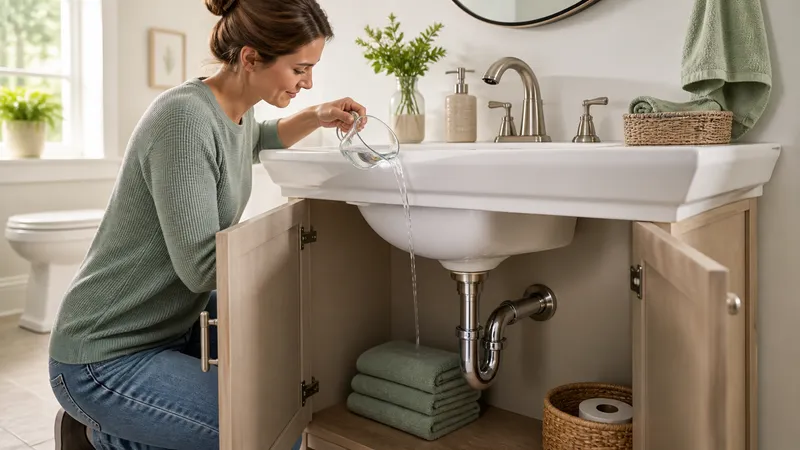
Usually a dry P-trap, not a sewer problem. Run water to refill it, then check for a damaged trap, bad vent, or (rarely) a sewer-line issue.
Key takeaways
- The most common cause is a dry P-trap: the water seal in the curved pipe under the sink evaporated from disuse.
- Fix it first by running water in that drain for 30–60 seconds. If the smell clears, you found the cause.
- Guest bathrooms, floor drains, and laundry sinks dry out fastest—weeks, not months, especially in a hot or dry house.
- If refilling the trap doesn't fix it, suspect a damaged or missing trap, a blocked plumbing vent, or (rarely) a sewer-line problem.
- Sewer gas contains hydrogen sulfide and methane. The smell from one dry trap is a nuisance, not a gas-leak emergency—but a strong, persistent smell after refilling every trap in the house is a call-a-plumber situation.
- Never confuse a sewage smell with a natural-gas or carbon monoxide smell. Those are different emergencies with different responses.
If a sink, tub, or floor drain smells like sewage, the most likely cause is a dry P-trap: the curved section of pipe under the fixture that normally holds a small amount of standing water and blocks sewer gas from rising back into the room. When that water evaporates—usually because the drain went weeks without being used—the seal is gone and gas has a clear path up the pipe. The fix for that cause takes under a minute: run water into the drain and let the trap refill. If the smell doesn’t come back, that was it.
This page covers the dry-trap cause first, since it explains most of these calls, then the less common causes: a damaged or missing trap, a blocked vent, and (rarely) a sewer-line problem.
What a P-trap actually does
Every drain fixture in a house—sink, tub, shower, floor drain, washing machine standpipe—connects to a curved section of pipe shaped like the letter P (or a U). That curve is designed to trap a small amount of water after each use. The South Davis Sewer District, a public utility that fields exactly this complaint from residents, explains it plainly: the P-trap “holds a small amount of water that acts as a barrier,” keeping sewer gas out of the room. Federal plumbing standards for trap construction (used in manufactured-home code, 24 CFR § 3280.606) require that water seal to be 2 to 4 inches deep—enough to hold back gas pressure from the drain line, but shallow enough to clear with normal use.
That water only stays in place if the fixture gets used. Leave a drain alone for a few weeks and the water seal slowly evaporates, especially in a dry climate, a heated house, or a shallow trap. The same utility district notes the usual suspects: guest bathroom sinks or showers, vacant rooms, basement or garage floor drains, and laundry-room utility sinks. A vacation home closed up for a season is the extreme case—almost every trap in the house can run dry at once.
Most likely causes, ranked
| Cause | How common | Fix | DIY or pro |
|---|---|---|---|
| Dry P-trap (drain unused for weeks) | Most common by far | Run water in that drain 30–60 seconds to refill the seal | DIY |
| Damaged, disconnected, or missing trap (often after DIY work under a sink) | Common in older homes or after a recent repair | Reseat or replace the trap | DIY if comfortable with basic plumbing, otherwise a plumber |
| Blocked or undersized plumbing vent | Less common, but explains smell that returns after refilling | Inspect and clear the vent stack, sometimes on the roof | Plumber |
| Sewer-line crack, break, or backup | Rare | Camera inspection and line repair | Licensed plumber, always |
Fix the likely cause first: refill the trap
- Find every drain in the house that isn’t used often: a guest bathroom, a basement or garage floor drain, a laundry sink, a wet bar.
- Run the tap for 30–60 seconds at each one, or pour in about a cup of water for a floor drain.
- Wait a few minutes and check whether the smell has cleared.
- For a drain you know will sit unused again (a rarely used guest bath, a vacation property), the same utility source suggests adding a small amount of mineral oil on top of the water—it slows evaporation because oil doesn’t evaporate the way water does.
- Put a reminder on the calendar to run water in low-use drains at least once a month, which is the interval the utility district recommends to keep every trap sealed.
| Situation | What to do |
|---|---|
| Fixture used daily and still smells | Skip to the “damaged trap or vent” causes below |
| Guest bath, floor drain, laundry sink used rarely | Refill now, then run water monthly going forward |
| House was vacant or closed up for weeks | Check every fixture, not just the one that smells |
When refilling the trap doesn’t fix it
If the smell returns within a day or two of refilling the trap, or never went away at all, the water seal isn’t the problem. Three things to check next:
- A damaged or missing trap. If a sink was recently worked on—new garbage disposal, new vanity, a DIY drain repair—check that the trap is still connected and holds water. A trap installed dry, cracked, or with a loose slip-nut connection will never hold a seal no matter how often the drain runs.
- A vent problem. Every trap needs a vent pipe (usually running up through the roof) to let sewer gas escape outside and to let air into the drain line so water doesn’t get siphoned out of the trap when another fixture drains. A blocked, disconnected, or undersized vent can pull the water seal out of a trap even with regular use, or let gas bypass a trap that’s otherwise sealed correctly. This is a job for a plumber—vent stacks usually mean roof access and drain-line diagnostics.
- A sewer-line issue. This is genuinely rare for a single-fixture smell, but a cracked or partially blocked main sewer line can push gas back through multiple drains at once, often paired with slow drains or gurgling. If several fixtures across the house smell at the same time and refilling every trap doesn’t help, that’s a sewer-line inspection, not a sink repair.
When to call a professional
| Situation | Why it is not DIY |
|---|---|
| Smell persists after refilling every trap in the house | Points to a damaged trap, vent problem, or line issue you can’t diagnose from the sink |
| Smell paired with slow or gurgling drains in multiple fixtures | Possible sewer-line blockage or partial break |
| Suspected roof vent blockage | Roof access and drain-line diagnostics need a licensed plumber |
| Recurring odor from a fixture you can’t access (behind a wall, under a slab) | Trap or vent may need to be exposed or camera-inspected |
| Strong gas odor with headache, dizziness, or nausea | Stop and ventilate; treat as a possible gas or air-quality issue, not routine drain maintenance |
Keep the fix from repeating
Once you know which drains in your house dry out (usually the same one or two every time), the habit that actually prevents the smell is running water in them on a schedule, not waiting for the odor to come back.
The home systems hub covers other plumbing symptoms—running toilets, banging pipes, and pressure drops—that share the same “check the simple cause first” approach.
Related guides
Frequently asked questions
Why does my bathroom sink smell like sewage all of a sudden?
The most common cause is a dry P-trap—the curved pipe under the sink lost its water seal from disuse, letting sewer gas rise back up the drain. Run water in that sink for 30–60 seconds; if the smell disappears, that was the cause.
How long does it take for a P-trap to dry out?
It can happen in as little as two to four weeks in a rarely used drain, faster in hot or dry conditions. Guest bathrooms, basement floor drains, and laundry sinks that sit unused are the most common spots.
Is sewer gas from a dry trap dangerous?
Sewer gas contains hydrogen sulfide and methane, which are genuinely hazardous at high, sustained concentrations. A brief odor from one dry household trap is not that scenario, but it should still be fixed—run water to refill the trap, and call a plumber if a strong smell persists after you’ve checked every fixture in the house.
I ran water down the drain and it still smells. What now?
If the smell doesn’t clear after refilling the trap, the P-trap itself may be cracked, disconnected, or missing (common after DIY work under a sink), or a blocked plumbing vent is letting gas bypass working traps. Both call for a plumber to inspect the drain and vent lines.