
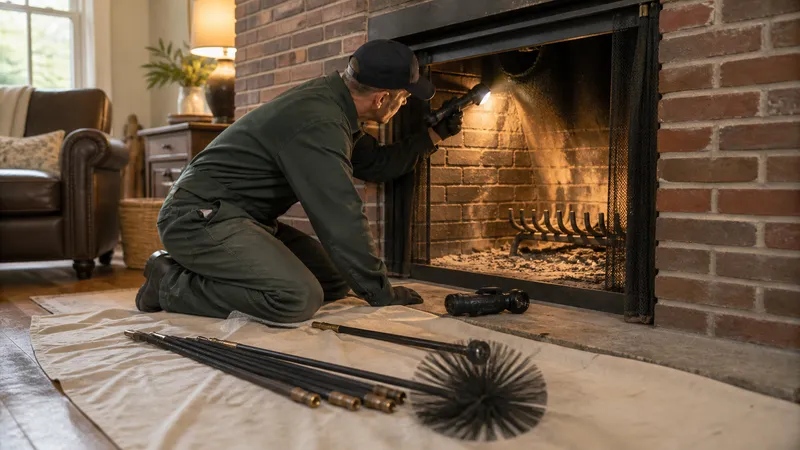
NFPA and CSIA say inspect every chimney annually regardless of use; clean only when creosote or blockage warrants it. Here's the actual schedule.
Key takeaways
- Inspect every chimney, flue, or vent annually — NFPA 211 and CSIA both say this applies even if you barely used it this year.
- Cleaning is not automatic. A CSIA-certified sweep cleans when they find 1/8 inch of sooty buildup, or any amount of glazed creosote.
- Glazed (shiny, tar-like) creosote is the most dangerous kind. It burns hotter and is harder to remove than flaky soot.
- Gas fireplaces and inserts don't build creosote but still need an annual vent, burner, and pilot check — moisture and blockage are the risk there.
- A Level 1 inspection covers routine annual use. A Level 2 is required after a sale, a chimney fire, or any change to the appliance or liner.
- Stop for anything structural: a cracked flue liner, a damaged crown or cap, or actual creosote removal. That's a CSIA-certified sweep's job, not yours.
Chimneys don’t need cleaning on a fixed annual schedule — they need an annual inspection, and cleaning only when that inspection finds enough buildup to justify it. NFPA 211, the fire code standard for chimneys, fireplaces, and vents, states that chimneys, fireplaces, and vents “shall be inspected at least once a year for soundness, freedom from deposits, and correct clearances” — regardless of how much the fireplace was actually used that year. The Chimney Safety Institute of America (CSIA) follows the same standard: schedule the inspection every year, and let a certified sweep decide whether cleaning is due based on what they find.
That’s the part people get backwards. “Clean it every year” is a common shorthand, but it’s not what the code says — a lightly used chimney can pass inspection two or three years running with nothing to sweep, while a heavily used one might need cleaning the same year it was last cleaned. This page is the systems-level view. The systems hub covers the rest of the house’s fuel-burning and structural maintenance.
Chimney and venting type: inspection frequency and what to watch for
| Type | Inspection frequency | Cleaning trigger | What to watch for |
|---|---|---|---|
| Wood-burning fireplace or stove | Annually — NFPA 211 / CSIA | 1/8 inch of sooty buildup, or any glazed creosote | Smoke backing into the room, a campfire smell between fires, visible soot flaking near the damper |
| Gas fireplace or insert | Annually | Rarely needs sweeping — creosote doesn’t form from gas combustion | Corrosion or blockage in the vent, pilot that won’t stay lit, moisture staining near the vent termination |
| Pellet stove | Annually, per manufacturer manual | Ash and fly-ash buildup in the venting, typically checked each burning season | Reduced draft, dark deposits around the vent cap, the stove’s own error codes for airflow |
Why creosote is the thing to actually track
Creosote forms when smoke, water vapor, and unburned wood particles rise into a chimney flue that’s cooler than the fire below, and condense on the interior walls. CSIA describes it showing up in three forms: crusty and flaky, tar-like and drippy, or shiny and hardened. All three are combustible. Enough of it, plus a hot enough flue, is what starts a chimney fire — which is why “clean chimneys don’t catch fire” is CSIA’s own framing for prevention.
The form that matters most is glazed creosote: a shiny, melted-looking, sometimes puffy or honeycombed layer that forms after repeated heat exposure or a previous small chimney fire. It’s denser, harder to remove with a standard brush, and more flammable than ordinary soot. CSIA treats any amount of glazed creosote as a reason to clean immediately — the 1/8-inch threshold that applies to normal sooty buildup doesn’t apply here; the presence of glaze is the trigger by itself.
The three levels of chimney inspection
CSIA and NFPA 211 define three inspection levels. Most homeowners only need Level 1 in a normal year.
| Level | When it applies | What it covers |
|---|---|---|
| Level 1 | Routine annual inspection, same appliance, same fuel, no known problems | Readily accessible parts of the chimney exterior and interior, the appliance connection, and a check for soundness and obstruction |
| Level 2 | Selling or buying the home, after a chimney fire, or after relining, changing fuel type, or replacing the appliance | Everything in Level 1, plus a video scan of the flue interior and a closer look at accessible attic, basement, and crawlspace chimney sections |
| Level 3 | A Level 1 or 2 inspection turns up suspected hidden damage | Everything above, plus removing sections of chimney or building material to access and inspect concealed areas |
Level 3 is uncommon and is only recommended by the sweep after they’ve already found something concerning — it’s not a routine step.
Gas fireplace and appliance venting: a different job than wood-burning
Gas fireplaces and inserts don’t produce creosote, so the “sweep the flue” logic that governs wood-burning chimneys mostly doesn’t apply. What does apply: gas combustion produces a substantial amount of water vapor, and modern gas appliances are efficient enough that much of that moisture and byproduct stays in the vent rather than venting out hot. An annual professional check still matters — it covers vent blockage, corrosion, draft, and the burner and pilot assembly, not creosote removal. Skip the annual check on a gas unit and the risk isn’t a chimney fire, it’s a vent that’s quietly corroding or blocking, which shows up as poor draft or, worse, combustion byproducts not clearing the house.
Caveats that change the schedule
| Situation | How it changes things |
|---|---|
| Burn unseasoned or wet wood | Cooler, smokier fires build creosote faster — check more often within the same season, don’t wait for next year’s inspection |
| Heavy use (daily fires all winter) | May need cleaning every year even on a chimney inspected annually; let the sweep’s findings set the interval, not the calendar |
| Light or occasional use | Can genuinely go a year or two between actual sweeps, but skip the annual inspection at your own risk — deposits from prior seasons don’t disappear on their own |
| Recently bought the home | Get a Level 2 inspection before the first fire if you don’t know the chimney’s service history |
| Manufactured/factory-built fireplace | CSIA notes these units should be swept at any appreciable buildup, not the 1/8-inch masonry threshold — the metal components corrode faster under acidic deposits |
When to call a professional
| Situation | Why it isn’t DIY |
|---|---|
| Any chimney sweeping or creosote removal | Requires the right brushes, rods, and technique to fully clear a flue without damaging the liner |
| Glazed creosote of any amount | Standard brushing often can’t remove it; may require specialized chemical or mechanical treatment |
| Cracked or damaged flue liner | A compromised liner lets heat and combustion gases reach nearby combustible framing — a fire and CO risk, not a cosmetic issue |
| Damaged chimney crown or cap | Lets water into the masonry, which freezes, expands, and accelerates structural failure |
| Smoke backing into the room or a persistent smoky smell between fires | Signals a blockage or draft problem that needs diagnosis, not a home remedy |
| Any prior chimney fire, known or suspected | Requires a Level 2 inspection before the chimney is used again |
Look for a CSIA-certified chimney sweep specifically — that credential means they’ve been tested on NFPA 211 compliance, creosote chemistry, and masonry and liner inspection, not just general handyman experience with a brush.
Related guides
Frequently asked questions
How often should I clean my chimney?
There’s no fixed annual cleaning rule. NFPA 211 and CSIA both call for an annual inspection of every chimney, and cleaning happens when that inspection finds 1/8 inch or more of sooty creosote, or any glazed creosote at all. A chimney used heavily some years may need cleaning annually; one used lightly may go two or three years between actual sweeps.
Do gas fireplaces need chimney cleaning?
Gas fireplaces don’t produce creosote, so they don’t need sweeping the way wood-burning chimneys do. They still need an annual professional check of the vent, burner, and pilot assembly — gas combustion produces significant water vapor, and a blocked or corroded vent is a carbon monoxide risk.
What is glazed creosote and why is it dangerous?
Glazed creosote is a shiny, tar-like, melted-looking buildup that forms when creosote has partially ignited or been exposed to repeated high heat. It’s denser and more flammable than flaky soot, harder for a standard brush to remove, and CSIA treats any amount of it as reason to clean immediately rather than waiting for the 1/8-inch threshold.
What’s the difference between a Level 1 and Level 2 chimney inspection?
A Level 1 inspection covers a chimney under continued use with no changes to the appliance, fuel, or liner — it checks the readily accessible parts of the chimney and flue. A Level 2 inspection adds a video scan of the flue interior and is required when you sell or buy the home, after a chimney fire, or after relining, changing fuel type, or replacing the appliance.
Can I clean my own chimney?
A homeowner can do the ground-level parts: watch for smoke backing up into the room, check the cap and crown from a safe vantage point, and keep the damper clear of debris. Actual creosote removal, flue brushing, and structural repairs need a CSIA-certified sweep — improper technique can miss glazed creosote or damage a liner.