
12 seasonal home maintenance tasks first-time homeowners consistently forget, with the specific consequence of skipping each one and when it's actually due.
Key takeaways
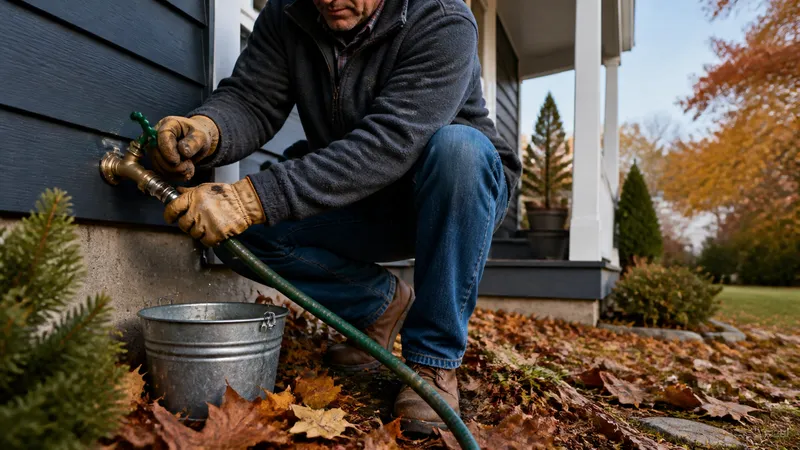
- Exterior hose bibs left connected into the first freeze are a leading cause of a burst pipe—disconnect hoses and shut off interior valves before the season's first hard freeze.
- NFPA 211 calls for chimney and vent inspection at least annually—most new homeowners don't book it until after the first fire, not before.
- Ceiling fans have a direction switch most new owners never touch; reversing it seasonally changes real comfort and can measurably cut heating and cooling costs, per DOE guidance.
- Gutters need clearing more than once a year in most climates—after fall leaf-drop and again after any major storm, not just 'sometime in autumn.'
- Smoke and CO alarm batteries and function tests belong on the same clock-change reminder most people already have for their clocks.
- GFCI outlets should be tested with their own built-in test button each season, especially after a humid summer—not assumed to be working because the lights still turn on.
New homeowners forget seasonal tasks for a predictable reason: nothing about them is visibly urgent until the season actually turns, and a first-time owner hasn’t yet lived through a full year in the house to learn the pattern. These are the 12 specific tasks that come up most often as “wish I’d known” moments—each with the actual consequence of skipping it, not just a generic reminder to “stay on top of maintenance.”
The 12 tasks, and what skipping each one actually costs you
| # | Task | When it’s due | Why it’s forgotten | What skipping it costs |
|---|---|---|---|---|
| 1 | Disconnect and drain exterior hose bibs | Before the first hard freeze | Not visible until a pipe has already burst | A frozen supply line can crack and flood a wall cavity once it thaws |
| 2 | Winterize/blow out the irrigation system | Before the first hard freeze | New owners often don’t know the house has one until it’s too late | Standing water in the lines freezes, expands, and can crack fittings and the backflow preventer |
| 3 | Test the sump pump | Early spring, before heavy rain | It’s out of sight in a basement or crawlspace corner most of the year | An untested pump is a common cause of a preventable basement flood |
| 4 | Schedule a chimney/vent inspection | Before the first fire of the season | Easy to assume “it looked fine last time we saw it” | NFPA 211 calls for at least an annual inspection; a blocked or damaged flue is a fire and carbon-monoxide risk |
| 5 | Clear gutters after fall leaf-drop (and again after storms) | Fall, plus a spring check | New owners often clean once and consider it done for the year | Clogged gutters overflow at the foundation, contributing to basement or crawlspace moisture |
| 6 | Re-caulk gaps around windows and doors | Before heating season | It’s a quiet, unglamorous task with no obvious deadline | Small gaps add up to real heat loss and higher winter bills |
| 7 | Reverse ceiling fan direction | At each heating/cooling season change | Most owners never notice the small direction switch exists | You lose a easy, no-cost comfort and efficiency adjustment |
| 8 | Swap the HVAC filter at season changeover | Every season at minimum; monthly for 1-inch filters | New owners often only remember when airflow is already weak | Reduced airflow makes the system work harder and can shorten its life |
| 9 | Test smoke and CO alarms | At each clock change | Not tied to any single memorable seasonal event on its own | A dead alarm defeats the entire safety system it’s part of |
| 10 | Test GFCI outlets with the built-in test button | Each season, especially after humid summer months | Outlets “seem fine” because the lights still work | A tripped or failed GFCI stops protecting against shock without any visible sign |
| 11 | Service the AC before the first heat wave / furnace before the first cold snap | Ahead of peak season, not during it | Booking a technician feels optional until the system fails on the hottest or coldest day | Peak-season breakdowns mean longer wait times and higher emergency service fees |
| 12 | Check attic insulation and ventilation before extreme seasons | Before summer heat and before winter cold | The attic is the most-ignored space in a house | Poor attic ventilation drives higher energy bills and, in winter climates, contributes to ice dams |
Why these specific tasks slip through
Three patterns explain most of this list. First, seasonal timing traps people—a task due “before the first freeze” has no fixed calendar date, so it’s easy to miss the window entirely. Second, out-of-sight locations like the attic, crawlspace, and sump pit don’t get a second look once move-in is done. Third, nothing on this list is an emergency until it suddenly is—a disconnected hose bib takes five minutes; a burst pipe from a frozen one takes days and a plumber to fix.
Ceiling fans: the one that surprises the most new owners
Reversing a ceiling fan’s direction seasonally is real guidance, not a myth. The U.S. Department of Energy recommends running fans counterclockwise in summer, so the airflow creates a cooling breeze, and clockwise in winter at a low speed, which gently redistributes warm air that has risen to the ceiling back down into the room—letting you nudge the thermostat a degree or two either direction without losing comfort (DOE Energy Saver Guide). Most fans have a small toggle switch on the motor housing, just below the blades, that a lot of first-time owners never notice until someone points it out.
When to call a professional
| Situation | Why it’s not DIY |
|---|---|
| Chimney, flue, or fuel-burning vent inspection | Requires a qualified sweep to assess creosote buildup, structural condition, and clearance—visual checks from the ground miss most real hazards |
| Irrigation system blow-out | Requires an air compressor rated for the job and knowledge of the specific system’s zones; a DIY attempt with the wrong equipment can damage lines |
| HVAC pre-season service | A technician checks refrigerant levels, electrical connections, and combustion safety that go beyond a filter swap |
| A sump pump that fails its test | A failed test means diagnosing whether it’s the pump, the float switch, or the discharge line—worth a professional look before the next storm, not after |
Related guides
Frequently asked questions
What seasonal maintenance tasks do new homeowners forget most often?
The most commonly missed tasks are disconnecting and draining exterior hose bibs before the first freeze, blowing out an irrigation system, scheduling a chimney inspection before the first fire of the season, testing a sump pump before spring rains, and re-caulking around windows and doors before heating season. These are easy to forget because nothing about them is visibly urgent until the season actually turns.
How often should gutters be cleaned?
Most homes with nearby trees need gutters cleared at least twice a year—once after fall leaf-drop and once in spring—with an extra check after any major storm. Homes without significant tree cover can often get by with an annual clean, but a first year in a new house is the right time to observe how your specific property actually collects debris.
Do I really need to reverse my ceiling fan direction seasonally?
It’s a real, if modest, comfort and efficiency habit, not folklore. The U.S. Department of Energy recommends running fans counterclockwise in summer to push cool air down and clockwise in winter to redistribute warm air that’s risen to the ceiling, which can let you adjust the thermostat slightly and reduce heating and cooling costs. Most fans have a small switch on the motor housing that most new homeowners never notice.
When should I winterize my irrigation system?
Before the first hard freeze in your area—typically requires an air-compressor “blow-out” of the lines by a licensed irrigation contractor or a rental compressor, since standing water left in the pipes can freeze, expand, and crack fittings or the backflow preventer. Check your local frost date and schedule it in advance; irrigation contractors book up fast in the weeks right before the first freeze.
How often should sump pumps be tested?
Test a sump pump before the season it’s most likely to be needed—typically spring, ahead of heavy rain—by pouring a bucket of water into the pit and confirming the pump activates and drains it. A pump that sits untested for a year is the single most common reason for a preventable basement flood during a heavy storm.