
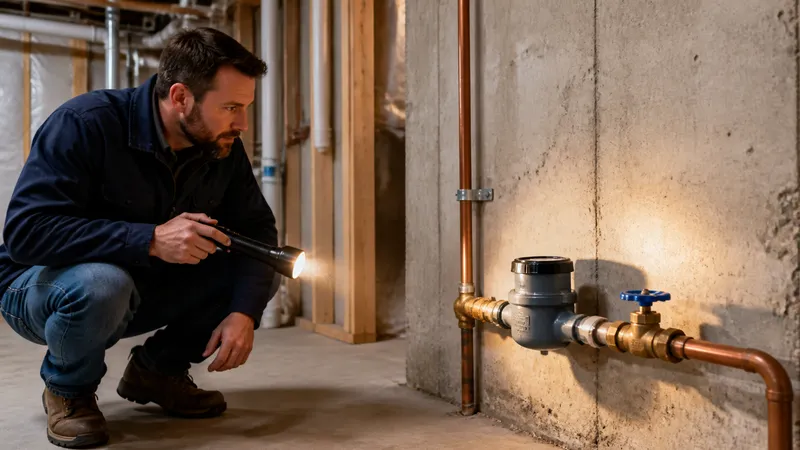
How to find your water, gas, and electrical shutoffs in a new home, what each one looks like, and why locating them before an emergency matters.
Key takeaways
- Find and physically test your main water shutoff in the first week—during a burst pipe is the wrong time to be searching for it.
- The gas shutoff is usually the first fitting next to the meter; you can close it in an emergency, but only a professional should turn it back on.
- The electrical panel's main breaker cuts all power at once; know its location even if you rarely need to use it.
- Keep a wrench near the gas shutoff and label all three shutoff locations somewhere every household member can find them.
- This page covers only shutoff locations—for the rest of the first-week safety walkthrough, see the companion guide.
Every homeowner should locate three shutoffs in a new home before they’re ever needed: the main water shutoff, the gas shutoff at the meter, and the electrical panel’s main breaker. Ready.gov’s disaster-preparedness guidance is direct about this: knowing how to turn off these utilities—and doing it before an emergency, not during one—helps prevent water damage, fire, and electrical hazards (Ready.gov: utility safety guidance).
Where each shutoff usually is
| Shutoff | Typical location | How to close it |
|---|---|---|
| Main water | Basement, crawlspace, or utility closet where the line enters the house, often near the water heater; garages in homes without a basement | Turn the valve clockwise until it stops; a lever-style valve quarter-turns |
| Gas | At the meter, usually on an exterior wall or side yard | Use a wrench on the rectangular tab, a quarter turn to close; keep a wrench stored nearby |
| Electrical (main breaker) | Inside the main electrical panel, typically garage, basement, or utility closet | Flip individual circuits off first, then the main breaker for a full shutdown |
Water shutoff: find it, then test it
Locate the main shutoff and turn it closed and back open once so you know it isn’t seized—an old valve that hasn’t moved in years can be stiff or fail when you actually need it under pressure. There’s usually a second valve at the water meter itself, near the curb or property line, which belongs to the utility rather than the house—know where it is, but the main shutoff inside the house is the one you’ll use for a burst pipe or a fixture replacement.
Gas shutoff: locate it, but don’t relight anything yourself
The gas shutoff is typically the first fitting on the pipe next to the meter. Store a wrench sized to it nearby, sealed in a bag so it doesn’t rust, and make sure more than one person in the household knows where it is.
Electrical panel: know the main breaker
Find your electrical panel and confirm which breaker is the main—it’s usually the largest breaker, often at the top, and it’s frequently labeled “MAIN.” Turning off individual circuit breakers isolates one area of the house; the main breaker cuts everything at once, which you’d use for a full-house shutdown during electrical work or an emergency. If breakers aren’t labeled, this is a good first-month project—label each one as you identify which room or appliance it controls.
Why this matters before you need it
A burst supply line can release several gallons of water per minute. The time spent finding an unfamiliar shutoff valve during that emergency is time the water keeps flowing. Doing this walkthrough calmly in week one—and making sure every adult in the household knows the three locations—is the entire point.
When to call a professional
| Situation | Why it’s not DIY |
|---|---|
| Gas shutoff valve is corroded, stuck, or won’t turn | A licensed plumber or your gas utility should service or replace it—forcing a stuck gas valve risks a leak |
| Main water shutoff is seized and won’t close | A plumber can replace the valve; don’t wait until an active leak to discover it doesn’t work |
| Electrical panel shows signs of damage, burning smell, or unlabeled circuits you can’t safely trace | A licensed electrician should inspect and label the panel |
| You need to turn gas back on after any shutoff | Only your utility or a certified technician can safely restore and relight gas service |
Related guides
Frequently asked questions
Where is the main water shutoff valve usually located?
Most commonly in the basement, crawlspace, or a utility closet where the water line enters the house, often near the water heater. In homes without a basement, it may be in the garage or near an exterior wall on the street side of the house. There’s also a separate valve at the water meter, typically underground near the curb or property line, used by the utility.
How do I find the gas shutoff valve?
Look for the gas meter, usually on an exterior wall or in a side yard. The shutoff valve is typically the first fitting on the pipe next to the meter—a rectangular tab that you turn a quarter turn with a wrench to close. Keep a wrench sized for it stored nearby in a sealed bag so it’s ready in an emergency.
Can I turn my own gas back on after a shutoff?
No. Once gas is shut off, your utility provider or a certified technician needs to turn it back on, purge the lines, and relight pilot lights on appliances safely. Relighting gas appliances yourself without that inspection risks an unburned gas buildup or an incomplete pilot relight.
What’s the difference between shutting off a breaker and the main breaker?
An individual breaker cuts power to one circuit—one room, one appliance, one zone. The main breaker, usually at the top or bottom of the panel, cuts power to the entire house at once. Turn off individual circuits before the main breaker if you’re working on a specific area; use the main breaker for a whole-house shutdown.
Why does it matter to find shutoffs before an emergency happens?
A burst pipe can release gallons of water per minute—every minute spent searching for the shutoff is more water damage. A gas leak or an electrical emergency carries similar urgency. Locating and testing each shutoff in a calm moment means you’re not learning your house’s layout for the first time during a crisis.