
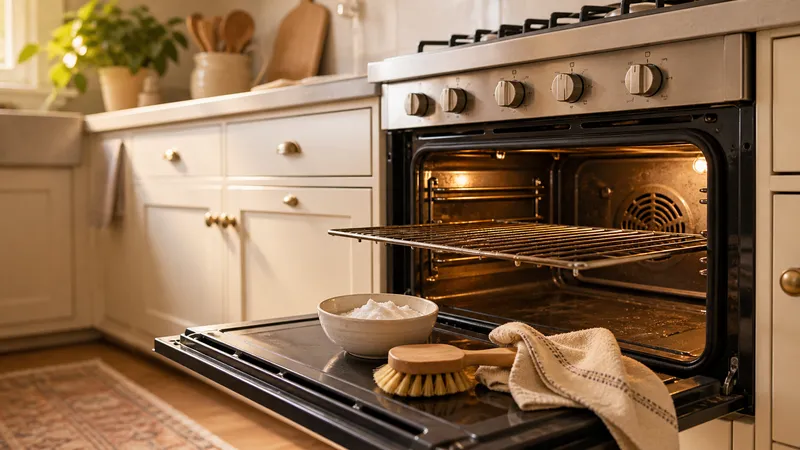
Gas and electric oven maintenance compared: self-clean vs. steam-clean safety, burner port cleaning, coil inspection, and a real deep-clean interval.
Key takeaways
- Deep-clean every 3–4 months with regular use, 6 months with moderate use, per Maytag and KitchenAid guidance.
- Self-clean runs over 800°F and produces real smoke for 30–60 minutes; ventilate and remove loose debris first.
- Gas burner ports need clearing with a straight pin or fine wire only—never a toothpick or paperclip—to keep the flame blue.
- A yellow or orange gas flame is a combustion warning, not a cosmetic issue; CPSC ties it to elevated carbon monoxide.
- Steam-clean handles light, fresh spills at lower heat in about 30 minutes; it will not replace self-clean on baked-on grease.
- Never use abrasive pads or powders on a smooth glass or induction top—manufacturer cleaners only, applied to a cool surface.
Oven maintenance splits into two different jobs depending on fuel type: gas ranges need burner-port and flame checks that electric ranges don’t, while electric ranges need surface- and element-specific care that gas ranges don’t. Both need the same interior cleaning cadence—every 3–4 months with regular use, about every 6 months with lighter use, per Maytag and KitchenAid—but the safe method to get there is not identical. This guide covers both fuel types side by side, with the one stop-line that applies specifically to gas: burner and flame issues are a combustion and carbon-monoxide concern, not a cosmetic one.
Self-clean vs. steam-clean vs. manual: what each actually does
| Method | How it works | Typical time | Best for | Real caution |
|---|---|---|---|---|
| Self-clean (pyrolytic) | Heats the cavity past 800°F to turn residue to ash | 3–5 hours, door locked | Heavy, baked-on grease and carbon | Real smoke and odor for the first 30–60 minutes is normal; heavy smoke or flames past 90 minutes means stop the cycle (Consumer Reports) |
| Steam-clean | Heats a cup of water in the cavity to loosen soil at lower heat | About 30 minutes, then wipe | Light, fresh spills between deep cleans | Will not remove baked-on grease; you still wipe the residue out by hand (Whirlpool) |
| Manual | Baking-soda paste or a non-caustic oven cleaner, applied by hand | 30–60 minutes plus sit time | Any oven, especially models without a self-clean cycle | Never spray oven cleaner on heating elements, igniters, or a smooth cooktop |
Why the self-clean cycle makes people nervous—and what’s actually documented
A pyrolytic self-clean cycle heats the cavity above 800°F, well past normal baking temperatures, to turn grease and food residue into ash. That heat is the whole point, and it explains the two things people notice: real smoke and odor in the first 30–60 minutes (worse if you skipped wiping out loose crumbs first), and a locked door for the 3–5 hour duration (Consumer Reports).
The failure mode people worry about—stressed door latches, damaged igniters, or blown control boards—does happen, but it’s uncommon. Consumer Reports’ reliability data puts self-clean-related problems at about 1% of the self-cleaning ranges in its testing pool, concentrated in older units or ovens with worn door latches, electrical components, or gaskets. The U.S. Consumer Product Safety Commission has also recalled specific self-cleaning oven models over the years for insulation gaps and door-lock failures that let excess heat escape during the cycle—for example, a 2004 recall of self-cleaning wall ovens tied to overheating. That’s a manufacturing-defect history, not a reason to avoid self-clean on a working range—but it’s a reason to run the cycle with the kitchen ventilated, the stovetop cleared, and not the night before you need the oven for a holiday meal.
Steam-clean, where available, is the gentler middle step. It heats a cup of water in the cavity to loosen fresh, light spills at a much lower temperature over about 30 minutes, then you wipe the softened residue out by hand (Whirlpool). It won’t touch baked-on carbon from a neglected oven, but it’s a lower-heat option worth using between deep cleans, especially on models where repeated high-heat self-clean cycles concern you.
Manual cleaning: racks, interior, door glass, gasket
Whatever the cycle, manual work fills the gaps self-clean and steam-clean don’t reach.
| Part | Method | Cadence |
|---|---|---|
| Interior walls and floor | Baking-soda paste (baking soda + water) left to sit, then wiped; or a non-caustic oven cleaner per label | Every 3–4 months, or after a boil-over |
| Racks | Remove and soak in warm water with dish soap, or run through self-clean if the manual allows it | Same as interior |
| Door glass | Glass cleaner or the baking-soda paste, never a metal scraper on tempered glass | As needed |
| Door gasket / seal | Wipe with a damp cloth only; do not scrub, stretch, or remove it to clean behind it | Every deep clean |
A torn or flattened door gasket lets heat escape, which shows up as longer cook times or an oven that runs hot to compensate—treat that as a parts replacement, not a cleaning problem.
Gas-specific maintenance: burner ports and the flame check
Gas ranges add one job electric ranges don’t have: keeping the burner ports clear so the flame burns clean.
A healthy gas flame is steady blue, with slightly yellow tips being normal on some LP (propane) setups (Whirlpool product help). If it’s mostly yellow, orange, or uneven, that’s the air-to-gas mixture running wrong—usually from clogged burner ports, a burner cap that isn’t seated correctly, or blocked ventilation. The U.S. Consumer Product Safety Commission’s carbon monoxide fact sheet identifies gas ranges, along with furnaces and generators, as CO sources when combustion is incomplete—so a persistent yellow flame is a signal to act on, not a look to ignore.
What’s homeowner-safe:
- With the burner cool and the gas off at the knob, clear visible debris from the ports with a straight pin, needle, or fine wire—never a toothpick (it can break off inside the port) or anything that widens the hole (Whirlpool/Amana product help).
- Wipe caps and grates with warm soapy water; make sure the cap is seated exactly the way it came off before you relight.
- After cleaning, relight and check the flame color. Blue and steady means you’re done.
Electric-specific maintenance: coils vs. smooth-top and induction
Electric ranges split into two very different surfaces, and each has its own do’s and don’ts.
| Type | Cleaning method | What to avoid | Inspect for |
|---|---|---|---|
| Coil elements | Lift and wipe the drip pans underneath; wipe the coil itself with a damp cloth once cool | Submerging the coil in water | Uneven discoloration, blistering, or bent coils—these indicate a failing element, not just soil (Whirlpool product help) |
| Smooth glass-top / induction | A cooktop-specific glass cleaner and a soft cloth or the scraper made for the surface | Abrasive pads, powders, steel wool, or standard oven cleaner—these can scratch or dull the glass permanently | Discolored spots under the glass over a radiant element, which can indicate a problem below the surface |
Coil burners that show bare metal, bulging, or arcing are a straightforward parts swap on most ranges—unplug or shut off the breaker first, and check the manual for your model’s release mechanism. Smooth-top damage is different: once the glass is scratched or a cleaner has etched it, there’s no undo, so the cleaner you use matters as much as how often you use it.
When to call a professional
| Situation | Why it’s not DIY |
|---|---|
| Gas smell, at any time | Leak risk—leave the area and call the gas utility or 911, don’t investigate yourself |
| Yellow or orange gas flame that stays that way after cleaning the ports | Combustion problem tied to carbon monoxide, not a cleaning fix |
| Pilot light or igniter that won’t light or won’t stay lit | Combustion component; the manual’s relight steps are the limit of homeowner work |
| Self-clean cycle with visible flame, or smoke past 90 minutes | Possible grease fire or door-seal failure in progress |
| Sparking, burning smell, or a breaker that trips when you turn on a burner | Electrical fault behind the panel |
| Cracked or chipped glass cooktop | Structural failure risk; a cracked surface can also expose wiring |
Related guides
Frequently asked questions
Is it safe to use the self-cleaning cycle on my oven?
For most ovens, yes—Consumer Reports’ reliability data shows self-clean-related problems in only about 1% of ranges. But the cycle runs over 800°F for 3–5 hours, locks the door, and can stress old door latches, igniters, or gaskets. Clear loose debris first, ventilate the kitchen, and don’t run it right before you need the oven.
How often should I deep-clean my oven?
Maytag and KitchenAid recommend roughly every 3–4 months for regular use and about every 6 months for lighter use, with spills wiped up as they happen in between. Your owner’s manual is the final word for your model.
Why is my gas burner flame yellow instead of blue?
A steady blue flame means clean combustion. Yellow, orange, or unsteady flames usually mean clogged burner ports, a misaligned cap, or a ventilation problem, and CPSC links poor combustion in gas appliances to higher carbon monoxide output. Clean the ports per your manual; if the flame stays yellow after cleaning, stop and call a technician.
What’s the difference between self-clean and steam-clean?
Self-clean uses dry heat over 800°F to turn baked-on residue to ash over several hours. Steam-clean uses a cup of water and lower heat, running about 30 minutes, to soften light, fresh spills so you can wipe them out by hand. Steam-clean is a between-cleanings step, not a substitute for deep cleaning.
Can I use any cleaner on a glass or induction cooktop?
No. Abrasive pads, powders, and standard oven cleaner can permanently scratch or dull a smooth glass top. Use a cooktop-specific cleaner made for glass and ceramic surfaces, and only apply it once the surface has fully cooled.