
Clean a garbage disposal weekly with ice and citrus, skip the bleach, and learn what jams it and when a hum means call a plumber.
Key takeaways
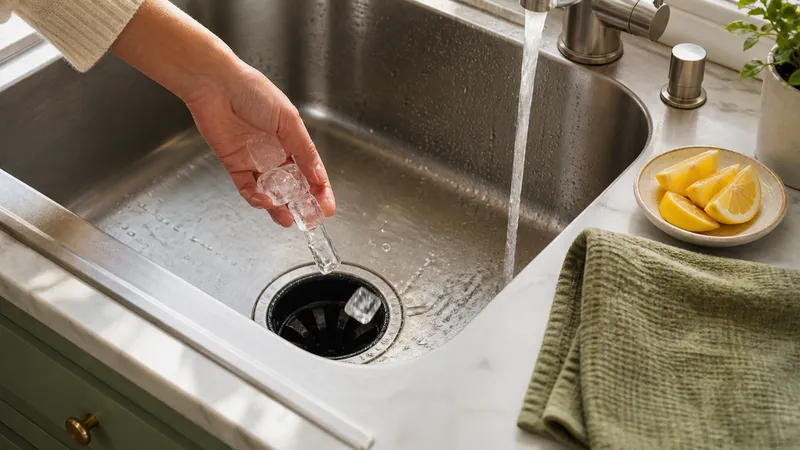
- Run cold water and drop in a handful of ice cubes weekly; it knocks buildup off the impeller plates.
- Never use bleach. InSinkErator's own FAQ warns it can degrade rubber gaskets and pipe seals.
- Never put your hand in the disposal. Cut power at the switch, then clear anything stuck with tongs or pliers.
- Grease, coffee grounds, and fibrous produce are the top clog causes, per EPA drain guidance.
- A hum with no spin is usually a jam: use the offset wrench, then the red reset button on the unit's underside.
- 2026 replacement runs about $200-$625 installed; a leak at the flange often means replace, not repair.
The common-practice cleaning cycle for a garbage disposal is weekly: cold water running, a handful of ice cubes to knock buildup off the grinding surface, and citrus peel or a baking soda-and-vinegar rinse for odor. InSinkErator’s own cleaning guidance recommends ice mixed with lemon or lime wedges, run with the water on, to freshen the unit — there is no separate manufacturer schedule beyond that, because frequent use is itself the best maintenance. This page covers the safe method, what should never go down the disposal, and how to tell a stuck jam from a job for a plumber. The garbage disposal hub and the appliance hub cover installation and full replacement.
The weekly cleaning cycle
| Step | What to do | Why |
|---|---|---|
| Weekly | Run cold water, drop in 4-6 ice cubes, switch on until the grinding sound stops | Ice knocks buildup off the impeller plates and grind ring; InSinkErator’s cleaning FAQ recommends ice with citrus wedges |
| Weekly or every other week | Grind citrus peel (lemon, lime, or orange) with the water still running | Cuts odor without chemicals |
| As needed for smell | 1/2 cup baking soda, then 1/2 cup vinegar, let sit 5-10 minutes, flush with hot water | Loosens odor-causing residue in the drain and splash guard, not the grind chamber itself |
| Never | Bleach, drain cleaner, or other harsh chemicals | InSinkErator’s FAQ: never put bleach in the disposer — it can degrade rubber gaskets and downstream pipe seals |
What not to put down a garbage disposal
| Don’t grind | Why | Source |
|---|---|---|
| Grease, fat, and cooking oil | Solidifies in pipes and traps solids downstream; the EPA’s septic care guidance names grease among the materials that clog drains and tanks | EPA |
| Coffee grounds | Settle into dense sludge in the trap or tank instead of washing through | EPA |
| Fibrous produce (celery, corn husks, onion skins, banana peels) | Stringy fibers wrap around the impeller shaft and jam it | InSinkErator |
| Bones, fruit pits, and other hard objects | Too hard to grind cleanly; the usual cause of a jammed impeller | InSinkErator troubleshooting guidance |
| Non-food items (utensils, produce stickers, twist ties) | Not food waste; jam or damage the grind chamber | InSinkErator FAQ |
Households on a septic system have less room for error here: the EPA notes that skipping or limiting disposal use “will significantly reduce the amount of fats, grease, and solids that enter your septic tank,” since food waste otherwise accumulates as scum and sludge that call for more frequent pumping.
It hums but won’t spin: what to do
- Flip the wall switch off. If you can reach the breaker, turn that off too.
- Look under the sink for the small hex-shaped hole in the center of the unit’s underside. Insert the offset wrench that came with the disposal (most units include one; a 1/4-inch hex key works if it’s lost) and work it back and forth until the impeller plate loosens.
- Shine a flashlight into the chamber from the sink side. If you can see what jammed it, lift it out with tongs or pliers.
- Find the red overload-protector button on the bottom of the unit. InSinkErator’s support guidance describes it as a red square that drops out about a quarter inch when tripped — press it back in gently. If it won’t stay in, wait ten minutes and try again.
- Restore power, run cold water, and switch the disposal on. If it still just hums, or the reset trips again right away, stop. That points to a motor or wiring fault, not a clearable jam.
When to call a professional
| Situation | Why it’s not DIY |
|---|---|
| Reset button trips repeatedly or won’t hold | Usually a failing motor or wiring fault, not a simple jam |
| Leak at the flange, mounting bolts, or discharge pipe | Often needs the unit reseated or replaced with plumbing tools |
| Burning smell, or the housing is warm and the motor is silent | Electrical hazard — unplug and call for service, don’t keep testing it |
| Unit is 8-10+ years old and needs a second repair | Replacement is usually the better math than another service call |
| Any work inside the wiring or electrical connection under the sink | Leave to a licensed electrician or plumber |
If a jam, a reset, or a new gasket doesn’t fix it, replacement is often cheaper than a second repair bill. In 2026, a new disposal unit runs about $100-$300, plus $100-$250 in installation labor, for an installed total around $200-$625, according to Angi’s 2026 cost data. A confident DIYer can install a new unit for closer to $75-$150 in parts alone — but a leak at the flange or any electrical work under the sink is exactly where professional installation earns its cost.
Related guides
Frequently asked questions
How often should I clean my garbage disposal?
Run it with cold water and a handful of ice cubes weekly to knock debris off the impeller plates, and grind citrus peel or flush with a baking soda and vinegar rinse every week or two for odor. There is no fixed manufacturer replacement-cleaning interval beyond that — frequent use is itself the best maintenance.
Does a garbage disposal have blades?
No. Disposals use blunt, spinning impellers that fling food waste against a stationary grind ring rather than cutting it. InSinkErator describes this grinding action as part of why the design has no exposed blades — but a plugged-in unit is still an electrical and pinch hazard.
Why does my garbage disposal hum but not spin?
A hum with no spin almost always means the impeller plate is jammed by something hard, like a bone, fruit pit, or utensil. Turn off the switch and breaker, work the jam loose with the offset wrench in the hex hole underneath, remove any object with tongs or pliers, then press the red reset button on the bottom of the unit.
Can I put bleach down my garbage disposal?
No. InSinkErator’s FAQ says never put bleach in the disposer, since it can degrade rubber gaskets, seals, and downstream pipe materials over time. Ice, citrus peel, and a baking soda and vinegar rinse clean and deodorize without that risk.
How much does it cost to replace a garbage disposal in 2026?
A new unit costs about $100-$300, plus $100-$250 in labor, for a total installed range of roughly $200-$625 in 2026, according to Angi’s cost data. A confident DIYer can install a new unit for closer to $75-$150 in parts alone.