
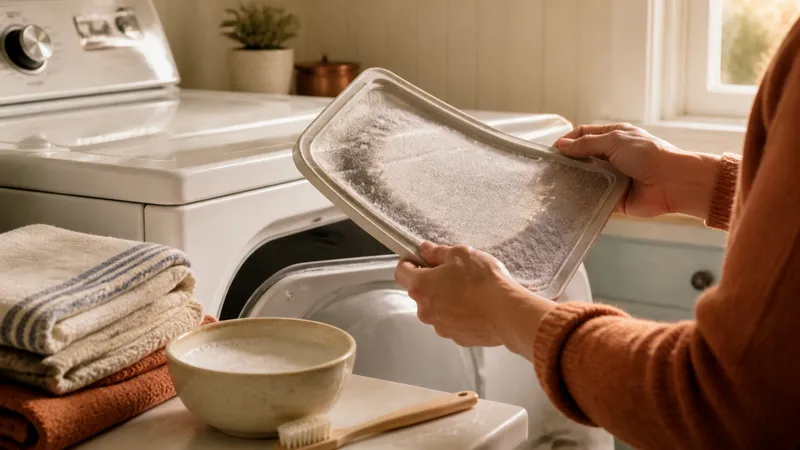
CPSC says clean the lint screen before or after every load. Here's the water test for hidden residue and how to tell the trap isn't the real problem.
Key takeaways
- Clean the lint screen before or after every load—CPSC's clearest interval in this whole topic.
- A screen can look empty and still be clogged with a waxy dryer-sheet film; run the water test to check.
- Water beading instead of soaking through means wash the screen with dish soap and an old toothbrush.
- Longer dry times with a clean screen point to the exhaust vent, not the trap—see the vent-cleaning guide.
- Wool dryer balls leave no residue; if you use dryer sheets, wash the screen monthly, not just when it looks full.
Clean the dryer lint screen before or after every load. That is the exact interval the CPSC’s clothes dryer safety alert gives, and it is the clearest, most emphatic maintenance instruction the agency publishes for any appliance: not monthly, not “when it looks full”—every load. This page is the lint-screen deep dive. The exterior duct system is a separate, less frequent job, covered in Dryer Vent Cleaning: How Often and Why It Prevents Fires.
Why “every load,” not “when it looks full”
CPSC’s guidance is specific: “Clean the lint screen/filter before or after drying each load of clothes.” The reason is airflow, not tidiness. Lint that builds up in the dryer or exhaust duct blocks the flow of air, causes excessive heat build-up, and can start a fire in some dryers, according to the same alert. A screen that looks visually clear can still be a problem, because two different things clog it:
- Visible lint — the fuzzy mat you peel off by hand. This is the part “when it looks full” catches.
- Invisible residue — a thin, waxy film left behind by fabric softener and dryer-sheet coating. It builds up on the fine mesh gradually and does not look like lint at all. This is a homeowner rule of thumb, not a CPSC finding, but it is easy to verify yourself with the water test below.
Because the residue layer is invisible, “it looks fine” is not a reliable signal. The every-load habit catches both problems; a look-and-judge habit only catches the first one.
The water test: check for hidden residue
| Step | What you do | What it tells you |
|---|---|---|
| 1 | Remove the lint screen and pull off any visible lint by hand | Confirms the mat itself isn’t blocking flow |
| 2 | Hold the empty screen under a running tap | Tests the mesh, not the lint you just removed |
| 3 | Watch the water | Passes straight through: mesh is clear. Beads or pools on top: mesh is coated |
| 4 | If it beads, wash with dish soap and an old toothbrush | Dish soap cuts the waxy softener film; a toothbrush reaches the mesh weave |
| 5 | Rinse and let the screen air-dry fully before reinstalling | A damp screen packs lint into clumps on the next load |
Run this test every few months, or any time drying times have crept up even though you’ve been clearing lint every load. It takes under two minutes and it is the fastest way to rule the screen in or out before you assume the vent is the culprit.
Signs the screen alone isn’t the problem
CPSC’s own alert gives the tell: “If clothing is still damp at the end of a typical drying cycle or drying requires longer times than normal, this may be a sign that the lint screen or the exhaust duct is blocked.” So work through it in order:
| You’ve done this | Still happening | Likely cause |
|---|---|---|
| Cleaned the screen every load for a week | Clothes still damp at cycle end | Screen residue—run the water test |
| Passed the water test (water runs through clean) | Cycles still run long | Exterior vent or duct, not the trap |
| Confirmed the outside hood flap opens and exhausts while running | Weak airflow at the hood | Duct blockage or a duct that’s too long, kinked, or the wrong material |
Once the screen tests clean and drying still takes noticeably longer than it used to, that’s the exterior duct system’s job, not the trap’s. That deeper, periodic clean is covered in Dryer Vent Cleaning: How Often and Why It Prevents Fires—this page won’t repeat those steps.
Dryer sheets vs. wool dryer balls
If the water test keeps turning up residue, look at what’s going into the dryer, not just what comes out of it. Fabric softener and dryer sheets work by leaving a light coating on fabric (and on anything else in the drum, including the screen). Wool dryer balls soften clothes mechanically—by tumbling and separating fabric—so they don’t add a coating at all. Again, this is a practical homeowner observation, not a CPSC or manufacturer standard, so treat it as a reason to check the screen more often rather than a reason to switch products:
| If you use | Add this to your routine |
|---|---|
| Dryer sheets or liquid softener | Hand wash the screen with dish soap monthly, on top of the every-load lint pull |
| Wool dryer balls only | Every-load lint pull is usually enough; still run the water test occasionally |
When to call a professional
| Situation | Why it’s not a lint-screen fix |
|---|---|
| Screen tests clean but drying is still much slower than it used to be | The exhaust duct, not the trap, needs attention—see the vent guide |
| You smell burning or see scorch marks near the lint trap housing | Stop using the dryer and have it inspected before the next load |
| The screen is torn, warped, or won’t seat flush in its slot | A damaged screen lets lint bypass it into the duct; replace with the manufacturer’s part |
Keep the habit visible
The screen habit only holds up if it’s tied to something you already do every load, not a date on a calendar you’ll forget.
Related guides
Frequently asked questions
How often should I clean the dryer lint trap?
Before or after every load. The CPSC’s dryer fire safety alert lists this as the first step to prevent overheating and fires, alongside checking whether clothes are still damp at the end of a normal cycle.
My lint screen looks clean—why is my dryer still running long cycles?
A screen can look empty while a thin, waxy film of dryer-sheet residue coats the mesh and blocks airflow. Run the water test: pour water through the screen. If it beads and pools instead of running through, wash the mesh with dish soap and a soft brush, then retest before assuming the vent is the problem.
What is the lint screen water test?
Hold the empty screen under running water. Water that passes straight through means the mesh is clear. Water that beads on top or pools means it is coated with residue and needs a hand wash with dish soap and an old toothbrush, then a rinse and full air-dry before it goes back in the dryer.
Do dryer sheets clog the lint screen more than wool dryer balls?
Dryer sheets and liquid fabric softener leave a waxy residue that can build up on the fine mesh over time; wool dryer balls do not, since they soften clothes mechanically instead of with a coating. This is a homeowner rule of thumb, not a CPSC finding—if you use sheets, add a monthly hand wash of the screen to your routine.