
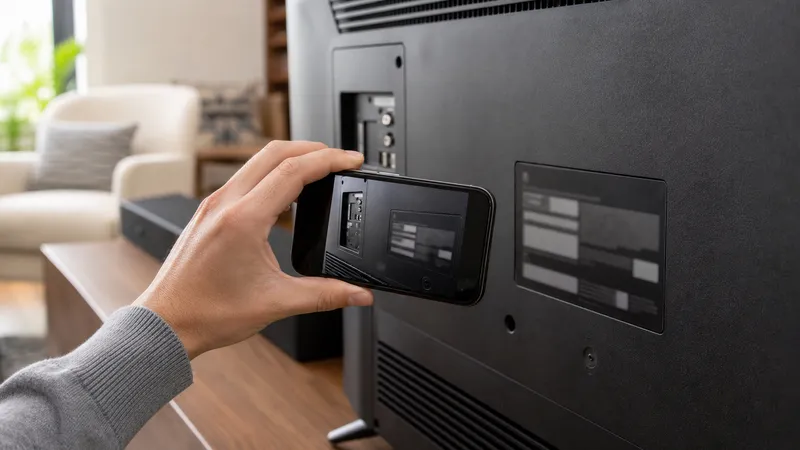
What to photograph for a home insurance inventory: wide room shots, close-ups of labels and serials, and the order that documents a home fastest.
Key takeaways
- Take two shots per item: one wide shot showing the item in the room, one close-up of any label, model number, or serial number.
- Photograph in this order: exterior of the house first, then each room wide, then valuables and electronics close-up.
- A slow walkthrough video narrating what you own covers gaps a still-photo pass misses—FEMA's Ready.gov guidance recommends both.
- Open cabinets, closets, and drawers before photographing; a closed cabinet door photographs nothing useful.
- Photograph receipts and appraisal documents flat and well-lit, not as a blurry phone snapshot at an angle.
For a home insurance inventory, photograph every room twice: one wide shot that shows the space and its contents together, and close-up shots of labels, model numbers, and serial numbers on anything with a plate or sticker. Open every cabinet, closet, and drawer before shooting—a closed door photographs nothing—and add a slow walkthrough video narrating what you own as a backup pass that catches what stills miss. This is the technique layer; for the checklist of what to record and how often, see the home inventory checklist.
The order that documents a house fastest
Working in a consistent order prevents skipped rooms and duplicate effort. FEMA’s Ready.gov guidance on documenting property recommends combining photos or video with written descriptions—year, make, and model where applicable—rather than relying on photos alone (Ready.gov: Document and Insure Your Property).
| Order | What to shoot | Shot type |
|---|---|---|
| 1 | Exterior — all four sides of the house, roof if visible from the ground, detached structures | Wide |
| 2 | Each room, one wide shot from the doorway | Wide |
| 3 | Each room again, panning slowly for a walkthrough video with narration | Video |
| 4 | Electronics, appliances, and furniture with a model/serial label | Close-up |
| 5 | Jewelry, collectibles, and anything individually valuable | Close-up, multiple angles |
| 6 | Receipts, appraisals, and any paperwork tied to high-value items | Close-up, flat and well-lit |
Two shots per item: wide and close-up
For anything worth more than a routine household item, take a wide shot showing it in context (proves it’s in your home, in its actual condition) and a close-up of any identifying label. A TV, a washer, a refrigerator, a laptop, and power tools all carry a model/serial plate—usually on the back, the bottom, or inside a door. Fill the frame with the label so every character is legible without digital zoom, and use a flashlight or a lamp if it’s in a dim spot.
| Item type | Where the label usually is | Notes |
|---|---|---|
| TVs and electronics | Back panel, often behind a port cover | Photograph before mounting on a wall if possible |
| Major appliances | Inside a door frame, on a side panel, or the back | Same label most warranty and repair calls will ask for |
| Furniture | Underside of a cushion, a tag on the frame, or none at all | If there’s no label, a wide shot plus a brand/style description is enough |
| Jewelry | No label — photograph from multiple angles instead | Consider a professional appraisal for high-value pieces |
| Tools and equipment | Stamped or stickered on the housing | Group similar tools in one wide shot, close-up only the expensive ones |
Don’t skip storage: closets, cabinets, attics, garages
The single biggest gap in most home inventories is unopened storage. Open every closet, kitchen cabinet, dresser drawer, tool chest, and any attic or garage storage before photographing. A photo of a closed cabinet door proves the cabinet exists, not what’s in it—and cabinets, closets, and the garage typically hold a disproportionate share of a household’s total value in small appliances, tools, off-season clothing, and sporting equipment.
Lighting and technique that actually helps later
- Turn on the room lights and open blinds before shooting; a dim wide shot hides half the contents in shadow.
- Hold the phone steady for close-ups—motion blur on a serial number makes the photo useless for the field it was meant to capture.
- Photograph receipts flat, not at an angle, and make sure the date and total are both legible in frame.
- Note the date in the photo’s own metadata (most phones timestamp automatically) or by including a dated receipt or note in the same shot.
When a professional photo matters more than a phone
| Situation | Why a professional helps |
|---|---|
| Fine art, antiques, or collectibles worth more than a few hundred dollars | An appraiser documents condition and value in a form insurers weight more heavily than a phone photo |
| Jewelry with no clear replacement equivalent | A jeweler’s appraisal photo and written description support a scheduled policy endorsement |
| Extensive storm or structural exterior damage | A licensed inspector’s photos and report carry more weight in a dispute than homeowner photos alone |
Related guides
Frequently asked questions
Should I take photos or a video for my home inventory?
Both, if you have time. A slow walkthrough video narrating what you see covers a whole room quickly and catches items you might not think to photograph individually. Still photos are better for close-ups of labels, model numbers, and receipts where a video frame is too blurry or too small to read later.
Do I need to photograph the inside of drawers and cabinets?
Yes, for anything with meaningful value—jewelry boxes, tool chests, filing cabinets with documents, kitchen drawers with small appliances or cookware sets. A closed cabinet door in a photo proves nothing about what’s inside it, and that’s exactly the kind of gap that shows up during a claim.
How close should a close-up photo of a serial number be?
Close enough that every character is legible without zooming digitally, which degrades quality. Fill the frame with the label, hold the phone steady, and use the flashlight or a lamp if the label is in a dim spot like inside a cabinet or behind an appliance.
Should I photograph the outside of the house too?
Yes. Wide shots of each side of the house, the roof if you can see it safely from the ground, and any detached structures (shed, garage, fence) establish the property’s condition before a loss, which matters for claims involving storm or exterior damage, not just contents.
What’s the biggest mistake people make when photographing for an inventory?
Photographing only what’s visible and skipping storage—closets, garages, attics, and the insides of cabinets. Most of a household’s total value sits in places that aren’t in the main sightline of a room, and those are the areas people forget to open before taking the photo.